
AS I write this article it's now officially spring and it looks to be a late one. After a false spell of lovely weather in March we were all thinking the grass would be growing in abundance by now but not so.
At this time of year, like many other farmers, I get impatient to turn the cattle we have over wintered in sheds out onto grass, but we have to be sure the ground conditions will take the animals without causing damage to future grazing.
The grass has started to grow and is looking healthy on the farms adjoining the moor, but just not good enough for that mass exodus, so we wait. We know the shortage of grass will continue until the trees show signs of producing green buds and then which will it be? Either the oak or the ash trees that burst their buds first, meaning a soak or splash of rain during the summer.
If it's like last summer we should be happy.


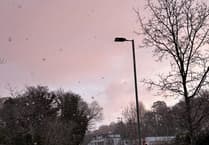
The first of the foals on the moor have started to arrive so that is usually a sign the weather conditions will soon improve.
March is a traditional time for controlled burning of old grass and gorse on the moorland. When I was a child from the age of 6, my mother, her friend and son would love to spend an afternoon swaling on areas that needed burning. We just got on and did what was necessary, but now a strict code of practice has to be followed.
The commoners who graze the commons are the ones who do the swaling and have to contact the fire services, Dartmoor Commoners' Council, Dartmoor National Park and Natural England every time. We have to inform these organisations which area of the common is going to be swaled as this saves the fire brigade being called out unnecessarily.
There are times when the general public immediately call the fire brigade when they see a fire on the moor — but if you see one at this time of the year, don't panic — it's an expensive call-out, especially if they are given the wrong location.
Swaling is permitted each year until April 14 but after that date if you see a fire that is the time to contact the fire services.
The burns are planned carefully and we work with and arrange natural fire breaks of streams, rivers or large paths on the boundaries or if they do not exist, then fire breaks are cut manually and importantly, the wind direction is taken into consideration to help the controlled burn. Once the scrub is burnt you will see the ponies move onto the area as they love to nibble the burnt grasses and then look very guilty with black marks from the ashes all over them.
Dartmoor has its own fire fighting team, which operates in conjunction with the fire service, especially in inaccessible areas where it is difficult to access.
The team is made up of farmers from the four quarters of the moor who know the moors like the back of their hand, such as where to cross rivers and where the bogs are, etc. They have quad bikes that carry water and have been very successful in putting out fires, like one a couple of years ago when a camping stove had been tipped over and accidentally caused a big fire — our team came in quickly to deal with the fire. I take my hat off to them because they do a lot of training and they are doing a great job to keep Dartmoor safe.
The only swaling fire that has got out of control so far this year was a very large one and was not run by the commoners but by Natural England who had to call out the fire brigade — at this point I will move on to another subject and make no further comment!
Most people will of heard of the IT system that the Rural Payments Agency (RPA) and DEFRA decided to use for the farmers' annual return for their basic payment system (BPS), which has been a total disaster this year after costing an estimated £150 million to set up.
Bearing in mind that this is an EU payment system, online is the only way British farmers were allowed to apply for payment. We were all very sceptical of this system. Most people never believed it was going to work and guess what — it hasn't!
A huge amount of time and effort has been put in by farmers to use the system without mentioning the frustration caused and now the authorities have had to go back to paper applications. In addition they have had to prolong the application period for an extra month.
Why do these government organisations make everything so complicated when even the ever-so simple minded of us could see a catastrophe was waiting to happen?
In addition to the online application form system there was also the online mapping system which hasn't worked either. The whole agricultural area of Great Britain has been re-mapped and put on a digital system and that has also now had to go back to a paper system. We are supposed to be working in the years of progress and less red tape — quite the opposite at present.
Ineligible areas of production that are not grazable by animals are marked on these maps but guess what? This hasn't worked either.
The different ways the areas have been mapped mean that mistakes have been made.
A simple example is that if you have more than 50 trees per hectare that area is designated as being ineligible for production on the maps, but if you have grass growing under the trees then it becomes eligible and if the area has been mapped by aerial photography, bracken often looks like trees and confuses the map!
So now we have gone back to physically checking all areas and have to agree or disagree with the powers that be.
We were promised by RPA to have the maps by the end of last December to give us plenty of time to check all the details but due to this muddle we have now been given 28 days from the day the maps are received. We have only just received them, so we have been pushed into a corner again, just when lambing and calving is now getting into full swing, which takes up most of our time.
We were promised that red tape was being cut – I wonder if the new government will address this issue after the general election?
Our farm vet is from Launceston, which for several years is one of the nearest veterinary practices for farm animals to farms around Tavistock. They are a very good practice and offered a micro-chipping service for farm dogs on every Wednesday during March. All dogs have to be chipped by April 2016 so I loaded three of our four working collies in the back of the Land Rover and took them to Launceston. We have a fourth collie bitch which was micro chipped last year when a young bull knocked her and broke her leg. She had to have the full treatment with a plaster cast plus lots of TLC and rest, but it was successful and she is an excellent working bitch.
So off I go to Launceston with three dogs in the back of the Land Rover where I met several other farmers also with their valuable dogs – all transported in the same way.
The vet nurses were very good and formed the Land Rovers into an orderly queue and chipped all the dogs in turn, which was a very interesting afternoon.
A farmer's working collie is a very valued asset on livestock farms and without them we are lost. Mine are now ready for one of their busiest times of the year as we lamb our sheep outdoors and our lambing season started at the beginning of April.
I will spend many hours with them, which is a great relationship because they always try to please, never answer back and also seem to enjoy my company.
Who could ask for any more from a workmate?
Comments
This article has no comments yet. Be the first to leave a comment.