

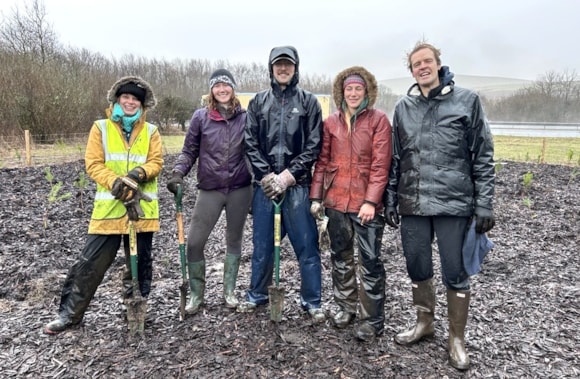
Okehampton residents played a key role in a recent environmental initiative, as National Highways and Earthwatch Europe partnered to create a Tiny Forest at the A30 Sourton Cross services, just outside the town.
Okehampton residents came together to help Earthwatch plant the Tiny Forest, using the Japanese Miyawaki method - a technique used to plant miniature, fast-growing native woodlands in small spaces - to boost biodiversity and improve the experience for all drivers stopping at the service area.
This is a first for National Highways and is funded through its Innovation and Research programme. Ben Hewlett, senior environmental advisor at National Highways, said: “Our work goes beyond roads – we’re investing in the environment and local communities, adding real value to society.
“It’s a first for us, and we’re delighted to be working with Earthwatch on this initiative to trial a new technique and aid tree establishment.




“Tree planting and green spaces are central to our commitment, and the Sourton project will enhance biodiversity and the experience for all visitors.”
Species such as oak, hornbeam, birch, hawthorn, crab apple, field maple, hazel and local shrubs now fill a 200-square-metre plot.
Tiny Forests store carbon, mitigate flooding, attract wildlife and improve air quality. The Sourton site will provide screening from the A30 and a green space for people to connect with nature.
Grace Gale, project manager at Earthwatch Europe, said: “This project connects communities with the environment, and we’re thrilled to bring it to Sourton.
“It’s vital to give people the knowledge and skills to protect our natural world.”
Earthwatch sourced 375 trees for the project through the Community Trees Programme, which donates trees to local communities.
The charity has also planted over 300 Tiny Forests since 2020 and will monitor the Okehampton site’s development.
Comments
We've recently changed our login process. If you have an account for commenting, you will need to re-register on the login window.
This article has no comments yet. Be the first to leave a comment.