
THE next couple of weeks will be a tense time for one Dartmoor farmer — Ken Heard has already lost 600 sheep, the culmination of a lifetime's work, and now has to sit back and wait to see if he loses his last remaining animals — vital if the flock is ever to be rebuilt.
MAFF announced last week it had finished testing sheep on large tracts of Dartmoor and found no sign of foot and mouth. But ministry vets are now testing animals in 'hotspots' — areas previously infected or contiguous to infected areas.
Any sign of the disease would bring about more large-scale culls.
'We lost a lot of sheep that were contiguous to the moor, sheep that were uninfected with the disease,' said Mr Heard.

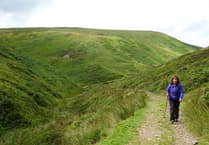

'These are our last sheep. We want to do everything we can to save the sheep on the moor because they are hefted — they would be a nucleus for us to start up again. If they do get the disease that's the end of the story — it's very important for us, and other farmers on the moor, to keep this nucleus of sheep.
'It's a very tense time for us, and it could be three weeks before they get up to us.'
'Hefted' is a local term which refers to the sheep's innate knowledge, passed down through the generations, of its own bit of the moor. It is this deeply inbred characteristic that allows farmers to leave the sheep to roam, without having to fence them in — an important aspect of the Dartmoor landscape.
Ken is 68 now. It took him 45 years to develop the flock that was annihilated in a single afternoon. He doesn't think he would want to start again if he loses the last of his flock, though twin sons David and John are keen, but he is optimistic.
'John went up on the moor to check on the animals — the sheep were running and jumping. He came home delighted.
'The lambs would be the first to show the symptoms, but they seem fine, we are all very happy to see that.'