
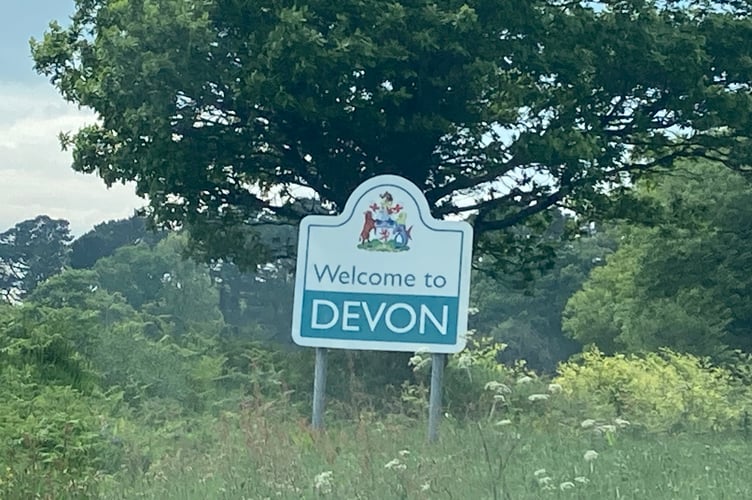
“Devon is not a single place,” proclaimed Torbay Council leader Dave Thomas. “It’s a collection of distinct communities, each with its own needs and opportunities. Our residents have been very clear. They want decision makers close to the communities they serve.”
It was a view echoed by Plymouth’s cabinet member for strategic planning and transport, John Stephens. “Decisions must be made closer to communities, not in distant towns and chambers,” he said. Exeter City Council leader Phil Bialyk agreed.
All of which makes it rather curious that the four-unitary model the three authorities are pushing would leave around 450,000 of us outside Exeter, Plymouth or Torbay, in a proposed ‘Devon Coast and Countryside’ authority stretching some 5,500 square kilometres.
A vast patch running 70 miles from Lynmouth to East Prawle and 60 miles from Axminster to Holsworthy hardly seems designed to bring decision-making closer to the people.




As Torbay councillor George Darling put it: “Are we retaining our identity by selling theirs down the river?"
“What does Ivybridge have in common with the gigantic Plymouth urban area?” he asked.
“If we go with the proposal that is being put forward, we are putting ourselves first, but we are sacrificing these smaller communities that are our neighbours.”
You might think the answer is obvious. Yet despite all three authorities backing a four-unitary model, Plymouth and Exeter also insist that Torbay should absorb 23 Teignbridge and South Hams parishes, something Torbay does not want. That point matters because the government originally asked Devon’s authorities “to work together to develop and jointly submit one proposal for unitary local government across the whole of your area.”
As Teignbridge managing director Phil Shears has reminded his members, ministers “cannot go freestyle and pick and mix. They have to go with just one of the proposals being put forward.” Had Plymouth, Exeter, and Torbay produced a single shared model, it would have carried far more weight.
So why insist that Torbay must expand when it has no appetite for it? Possibly because Plymouth and Exeter are both determined to expand themselves. Plymouth wants to take 13 South Hams parishes; Exeter, a remarkable 49 from Teignbridge, East Devon and Mid Devon. If Torbay stands still, the scale of those grabs becomes harder to justify.
Even so, the government is still more likely to pick one of the Torbay, Exeter and Plymouth variants than either of the remaining alternatives: the County Council’s ‘New Devon’ or the District Councils’ ‘1-4-5’ model. And if the proposed Coast and Countryside authority is too big to allow local decision-making, then the County Council’s even larger 6,627-square-kilometre ‘New Devon’ is obviously worse.
Which is why some find it puzzling that County Council leader Julian Brazil and deputy Paul Arnott, both Lib Dems, are championing it. As East Devon’s portfolio holder for Place, Infrastructure and Strategic Planning said when backing ‘1-4-5’: the principle of devolution is about making decisions “closest to the people who are going to be affected.” On that measure, he argued, ‘4-5-1’ is the least damaging of the options.
None of the proposals is ideal. But the priority should be the best outcome for all of Devon, not just a select few. As Torbay MP and councillor Steve Darling warned: “We need to make sure it’s not a rump rural Devon. That’s utterly shameful.”
Comments
We've recently changed our login process. If you have an account for commenting, you will need to re-register on the login window.
This article has no comments yet. Be the first to leave a comment.