
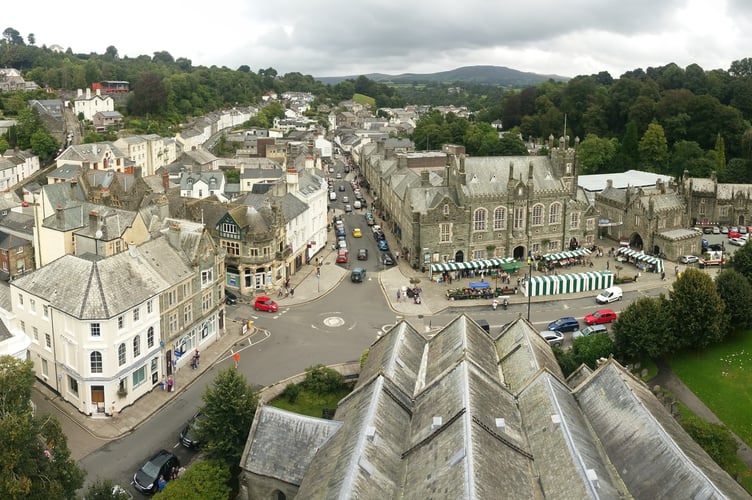
West Devon residents will pay slightly more council tax from April, councillors have agreed.
The borough council has ‘reluctantly’ agreed to increase its share of the council tax bill for 2026/27 to £277.46 for a Band D property.
This is an increase of £8.05 per year (15p per week) for a Band D property. with residents in Band A, B or C properties paying less and those in Bands E and above paying more.
The rise agreed by councillors represents an increase of 2.99 per cent year on year.
The full amount of the council tax to be paid by residents will be finalised when Devon County Council agrees its share of the council tax bill, the largest slice of the pie.
Money also goes to the police, fire service and town and parish councils.
The borough council agreed its 2026/2027 budget for the next financial year on Tuesday, February 17.
In doing so, councillors criticised the government’s funding of local authorities, saying rural councils (such as West Devon) would be worse off than urban areas in the money, which is allocated per head of population.
It says the reduction year on year in the money provided by the government – something which has been ongoing since 2010 - is putting increasing pressure on essential services.
West Devon Borough Council has lost £300,000 (7.5 per cent) in its funding from government covering 2026-2029. This forces it to rely on council tax increases to fund core services.
This comes as the council faces increased costs such as temporary accommodation, inflationary increases and a reduction in income.
The council is forecasting a budget shortfall of £500,000 for 2027/28.
The new budget will include £200,000 for economic development and funding for public toilets, community buildings and car parks and decarbonisation of council’s assets. Also, supporting communities and land owners with affordable housing.
Cllr Mandy Ewings, Leader of West Devon Borough Council, said: “Rural councils like ours are being pushed to the brink, expected to cope with rising pressures while vital funding is stripped away.
“We work tirelessly for our communities, yet the higher costs of delivering essential services in rural areas are continually overlooked. It feels as though our residents are being left behind and forced to pay more.”
Cllr Chris Edmonds, Hub Committee lead for finance, said: “The council will continue to deliver value for money and ensure financial sustainability remains one of our key priorities, protecting essential frontline services wherever possible.”
Devon County Council uses council tax to provide education, roads, care for older people and people with disabilities, child protection, youth services, libraries, and recycling centres and waste disposal services.
Devon County Council typically receives 70 per cent of the council tax paid by West Devon residents. West Devon Borough Council receives roughly 11 per cent, Devon and Cornwall Police 11 per cent and Devon and Somerset Fire and Rescue around four per cent. The remaining four per cent goes to town and parish councils.
Meanwhile, West Devon Borough Council uses council tax to provide refuse collection, kerbside recycling, housing, planning, street cleaning and leisure services.
The current local government reorganisation is seeking to bring in unitary authorities across Devon, which would take over county and district/borough councils’ current responsibilities.



Comments
We've recently changed our login process. If you have an account for commenting, you will need to re-register on the login window.
This article has no comments yet. Be the first to leave a comment.