

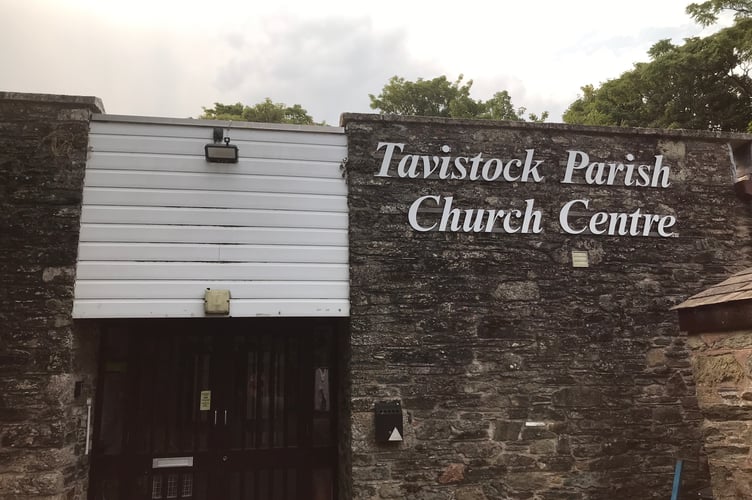
The Tavistock Local History Society’s latest event, the Members' Project Evening, was held on Tuesday, December 9, at which attendees were treated to talks on a range of topics and several different historical periods.
After festive refreshments and a picture quiz, Simon Dell spoke about his recent research on Tyrwhitt's Tramway. Thomas Tyrwhitt was born in 1762 and was MP for Okehampton from 1796 to 1802.
He was responsible for many projects on Dartmoor, including founding Princetown and the prison. He was behind the Plymouth and Dartmoor Railway Acts from 1819, which authorised the construction of a line from Crabtree (later Sutton Pool) to Princetown, as surveyed and marked out by William Shillibeer.
In 1821, the line between Crabtree and Roborough was authorised to deviate to follow the contours with a 620-yard tunnel. The railway, which was actually a horse-drawn tramway, was opened in 1823.

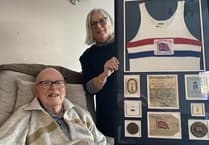

The next speaker was Susan Reynolds of the Tavistock Embroidery Group, who, assisted by her daughter Amanda, talked about the Tavistock Textile.
A team of 17 skilled needleworkers spent five years on a magnificent embroidery work depicting everyday life in Tavistock. The work was never interrupted, even by Covid, and features over 50 scenes from Tavistock's history. The scenes include Goose Fair, the Spitfire, suffragettes, American troops and French POWs.
The textile, which the society helped to fund, is now housed in the Robing Room in the Guildhall in Tavistock. It complements the Tavistock Embroidery, a more formal depiction of the town’s history, which is displayed in the town hall.
After a short break, Rosy Griffiths spoke about the Tavistock United Tradesmen’s Society. In 2014, just before the Tavistock Guildhall was refurbished as a heritage centre, a box full of dusty documents was found in a cupboard. These turned out to be partial records of the society, established on 29th March 1843. It was formed to provide sick pay – in return for a regular subscription – and funeral payments for members. It was open to all tradesmen other than those “whose profession is very dangerous”. Rosy brought along many of the organisation's source documents before they were deposited at the local record office.
The final speaker was Marie Smith, who talked about Dr James Gale, who went blind at an early age. He was the founding father of the Royal National Institute for the Blind, the inventor of a safe way to store and transport gunpowder, a governor of the poor in Plymouth and a trailblazer of electrical medicine. He became both famous and rich, selling land at Buckfastleigh to the monks who built Buckfast Abbey.
Chris Bellers, from the Tavistock Local History Society, said: “From humble beginnings in Tavistock, this man went on to great things... his biography, written when he was still only 35 years old, offers an interesting insight into a child's life in Tavistock during the 1840s and into the experience of a family coming to terms with the encroaching blindness of one of its sons.”
The next event is on Tuesday, January 13, at the Tavistock Church Parish Centre at 7.10pm, when Karen Moore will present 'The History of Swimming and Pools in Plymouth and West Devon'. Visitors/guests: £3; members: free. Contact the society via the website https://www.tavistockhistory.co.uk or the secretary at [email protected]
Comments
This article has no comments yet. Be the first to leave a comment.