
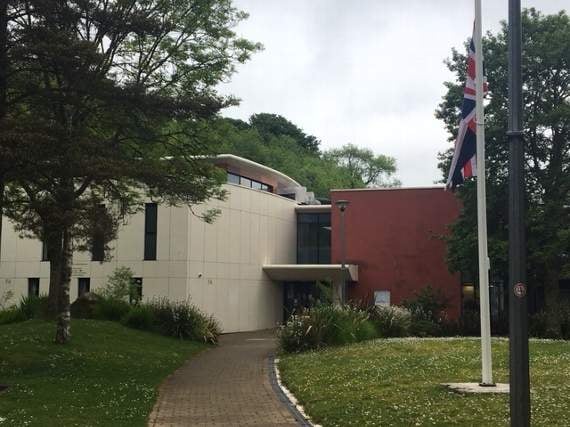
WEST Devon Borough Council is looking at cutting services it is not legally obliged to provide — such as maintenance of public open space and public toilets — as its ever-growing budget gap continues to hit home.
The hub committee at the council will be considering its budget for next year on February 6 and the papers which have just been released paint a dire picture of the council’s financial situation.
The council is facing a £900,000 funding gap by 2020/21, with that gap forecast to grow to £3.4-million over the next five years. The ever increasing gap is largely due to cuts in central government funding.
The announcement that the council faces a ominous financial future comes as little surprise, with the organisation having taken numerous steps in recent years to try and arrest sliding finances.




In 2014 the council launched its T18 transformation programme in partnership with South Hams District Council, aiming to transform how both councils worked, sharing staff and aiming to close the impending budget gap. The move has saved over £1.6-million a year.
Since then the councils have also considered creating a single second-tier council to cover both districts in an effort to fight monetary constraints, though West Devon councillors voted down those plans in October 2017 over issues relating to governance and poorer constituent representation.
Last November, the leader of the council Cllr Philip Sanders said the council would take on an in-depth examination of the whole of its expenditure in an effort to find ways to generate additional income. Tavistock and District Chamber of Commerce and business owners have objected to the council’s proposal to increase car parking charges in an attempt to raise car parking income by £180,000.
Cllr Philip Sanders, leader of West Devon Borough Council, said: ‘We knew this day was coming.
‘Even if we had agreed to create one new council with South Hams, we knew that the budget for 2018/2019 was going to be tight and we would have to make some cuts. Quite frankly, it is a miracle that we have not had to make these cuts before now.
‘To date we have managed our budget well by reducing costs, sharing our staff with South Hams District Council to create one workforce, our transformation programme T18 has saved us £1.6-million a year, including the introduction of better, smarter ways of working.
‘But we have cut our cloth so thin that there are now very limited opportunities for making further efficiencies. It’s time to take a realistic look at the non-statutory services we provide and start cutting those.’
Statutory services in West Devon — services that the council has to provide — include recycling and waste, licencing, planning, environmental health, looking after the homeless and collecting council tax and benefits rates.
Non-statutory services in West Devon — services which the council currently provides, but is not required to provide by law — include public toilets, grant funding and maintenance of public open space. These are the sort of services now under threat.
Cllr Sanders said: ‘These changes will be felt the most by our partners and the community groups that we offer grant funding to. The council has approved setting up a community lottery which will be launched later in the summer and it is hoped that this will help our partners and community groups to access further funding from the lottery in the future.
‘We can increase the proportion of council tax that we collect from our residents but we are limited to only increasing it by 2.99% (£6.52) on a band D property to £224.91 for 2018-19.
This does not solve our problems.
‘A 1% increase in council tax only generates an extra £44,000 in council tax income for the borough council.
‘We will continue to look at ways that we can generate an income for ourselves so increasing fees and charges is one way. We are also investing money in commercial property to generate an income.
‘But these proposals will not be enough in the long term to solve our budget problems where the council is facing a £0.9-million funding gap by 2020/21 and £3.4-million over the next five years.’
West Devon Borough Council’s hub committee will discuss the budget on February 6, before its recommendations go ahead of full council for approval on February 20.
To access the budget papers click: http://mg.swdevon.gov.uk/ieListDocuments.aspx?CId=221&MId=458&Ver=4
Comments
This article has no comments yet. Be the first to leave a comment.