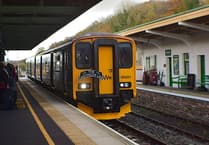
Walter Henry Passmore, Mayor 1946/47, 1947/48, 1948/49, 1949/50, 1950/51, 1955/56. WHEN he was admitted as a Freeman of the Borough of Okehampton in the Mayoralty of William W J Cornish on May 4 1961, it was in recognition of the occupancy of the mayoral chair on six occasions and his services as an alderman and councillor for over 25 years. The certificate went on to say it was for ?His ability and ardour in the furtherance of projects for the benefit of Okehampton and the welfare of the inhabitants and in particular his services for the advancement of cultural and Christian activities of the borough?. There could be no better summary of the life of Mr Passmore. Surprisingly for a man of his ability and background, he entered civic life rather late on, as he ran the business of Passmore and Son, who were delivery agents for the London and South Western Railway and later the Southern Railway. The company were also coal merchants and expanded by diversifying into removals and general transport. Educated at Shebbear College, his father, Richard Passmore, was one of the original members of the first council to be formed under the Municipal Corporations Act of 1885 and served for many years. He will always be identified with the Congregational Church in North Street, serving in many capacities and being made a life deacon in 1952. His lorries were always available to transport members of the junior church, the Boys? Brigade and the Girls Life Brigade. Among the many causes Mr Passmore supported were the St John Ambulance Association, the British Empire Cancer Campaign, the Old Age Pensioners? Association, the Okehampton Non Ecclesiastical Charity Trustees and other charitable trusts and the borough band. He was a governor of the Okehampton Grammar and Secondary Modern Schools. In his 25 years on the council, 11 were as alderman. In the five years after the war, when he was mayor, there were difficult times with shortages and rationing. During that time, he was elected president of the Okehampton Argyle Football Club in the most successful period of the club?s history and was involved in the formation of the Okehampton and District Minor Football League, which gave youngsters a good grounding. He was a great believer that sport was good for the mind, body and soul. As mayor in 1947, it was fitting, with the strong family links to the railways, that he should have the honour of naming West Country Class locomotive no 21C113 ?Okehampton?. Built at Brighton, it was the pride of the Southern Railway and weighed over 128 tons. The nameplate is now in the possession of Okehampton Town Council. Mr Passmore represented the town council on many occasions on the Devon County Boroughs and Municipal Corporation Association and Okehampton owed much to his integrity, vision and sound common sense which he always brought to local affairs. Walter Henry Passmore died on February 13 1962 aged 80 at his home, Solonhurst, Okehampton, and the following description was given at his funeral: ?He was a man of granite character, unbending for the right, large hearted and with a deep tenderness for little children that he loved?. His son, Walter John Passmore, was serving his first term as mayor, having inherited many of his father?s characteristics, and headed the funeral procession to the church, where there was a guard of honour. Walter John, besides being a councillor, alderman and mayor on so many occasions, was the first chairman of the West Devon District (now Borough) Council, was appointed a justice of the peace and was made member of the British Empire (MBE). Three generations of the Passmore family, including their wives, have given unrivalled service to the people of Okehampton. Mike and Hilary Wreford