
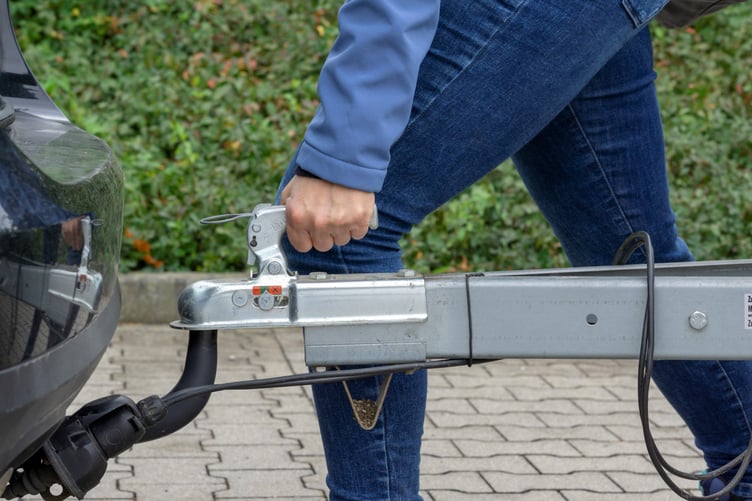
Most families choose their next car based on boot space and fuel economy, but overlook one detail that could transform how they travel: towing capacity. A standard family crossover can legally pull between 1,200 and 2,500 kg when properly equipped with a towbar—enough for a caravan, boat trailer, or large luggage trailer that expands your holiday options without needing a second vehicle.
The numbers tell a revealing story. According to AUTODOC specialists, around 25 per cent of vehicles across Europe have tow balls fitted, with distinct regional variations. In Sweden, just over 50 per cent of cars—approximately 2.2 million of 4.3 million vehicles—have tow balls installed. This reflects a broader shift in how families think about vehicle functionality. Modern cars deliver towing capability that previous generations reserved for proper 4x4s, yet many buyers never check the figures printed in their owner's manual.
What modern crossovers can actually pull
Popular family crossovers demonstrate impressive variation in their rated capacities. Based on AUTODOC data, a typical Honda CR-V manages around 1,500 kg braked towing weight, whilst a Škoda Kodiaq reaches approximately 2,500 kg in its higher-powered versions. The Nissan Qashqai sits in the middle at roughly 1,650 kg, and even smaller models like the Peugeot 3008 handle about 1,800 kg when properly specified.




These figures matter because they determine what you can transport. A small caravan typically weighs between 800 and 1,200 kg when loaded. A boat on a trailer might reach around 1,400 kg. Large enclosed cargo trailers used for house moves often weigh between 1,500 and 2,000 kg when full. Knowing your car's limit helps you plan properly rather than discovering restrictions at a rental depot.
The table below compares towing capacities across popular family vehicles:
Vehicle Model | Braked Towing Capacity | Typical Engine |
|---|---|---|
Honda CR-V | 1,500 kg | 2.0 Hybrid |
Škoda Kodiaq | 2,500 kg | 2.0 TDI |
Nissan Qashqai | 1,650 kg | 1.3 DIG-T |
Peugeot 3008 | 1,800 kg | 1.5 BlueHDi |
Volkswagen Tiguan | 2,500 kg | 2.0 TDI |
Mazda CX-5 | 2,000 kg | 2.5 Skyactiv-G |
Toyota RAV4 | 1,650 kg | 2.5 Hybrid |
Ford Kuga | 2,100 kg | 2.0 TDCi |
As the comparison shows, the Škoda Kodiaq and Volkswagen Tiguan lead the pack with 2,500 kg capacity in their diesel variants, whilst the Honda CR-V and Toyota RAV4 offer lower but still practical limits around 1,500-1,650 kg. The Ford Kuga's 2,100 kg capability positions it as a strong middle option for families who occasionally tow larger loads.
The towbar factor nobody mentions
Here's what changes the calculation: your car might have excellent rated capacity, but without a towbar fitted, that capacity remains theoretical. Installing a towbar typically costs between £150 and £400 for parts, plus fitting charges if you use a garage. Many families skip this addition when buying new, then regret the decision when they need to collect furniture, help a friend move house, or take a camping trip.
AUTODOC specialists emphasize that towing capacity depends on several interconnected factors. The vehicle's gross train weight—the maximum combined weight of car and trailer—must never be exceeded. Your car's kerb weight matters too, because safe towing typically means keeping trailer weight below 85% of the car's unladen weight, especially for less experienced drivers. Engine power plays its part, but modern turbocharged units deliver strong low-end torque that suits towing better than older naturally aspirated engines.
Understanding the legal requirements
UK towing laws changed in recent years, affecting what you can legally pull. If you passed your driving test after January 1997, you can drive a car or van up to 3,500 kg and tow a trailer up to 750 kg. You can also tow heavier trailers provided the combined weight doesn't exceed 3,500 kg. Breaking these limits carries serious penalties.
Trailers over 750 kg require their own braking system. The 85% rule—keeping trailer weight below 85% of your car's kerb weight—provides a safety buffer that improves handling, braking, and stability. Speed limits also change when towing: you're restricted to 60 mph on motorways and dual carriageways, which adds time to longer journeys but ensures safer travel.
Making the right choice for your family
The practical impact shows up during real-world use. Families who fit a towbar discover they borrow less, hire fewer vans, and say yes to opportunities they'd previously declined. A weekend at the coast becomes possible with a small caravan. Buying second-hand furniture no longer means paying delivery charges. Helping elderly parents clear their garage takes one trip instead of three.
AUTODOC's expertise in vehicle systems highlights that towing capability isn't just about the rated number. Your car needs proper electrical connections—modern LED lights require specific wiring that older bypass relays can't handle. Brake controllers should activate trailer brakes smoothly. Suspension often benefits from self-leveling or adjustable dampers when regularly carrying heavy loads.
The electric vehicle consideration
Electric vehicles bring new complexity to towing calculations. Many EVs offer impressive specifications on paper—models like the BMW iX can tow up to 2,500 kg, whilst the Tesla Model X handles around 2,300 kg. However, towing heavy loads significantly reduces electric range, often by a third or even half, requiring more frequent charging stops on longer journeys.
Chart: Expansion rate of charging and service infrastructure for hybrid vehicles in the EU
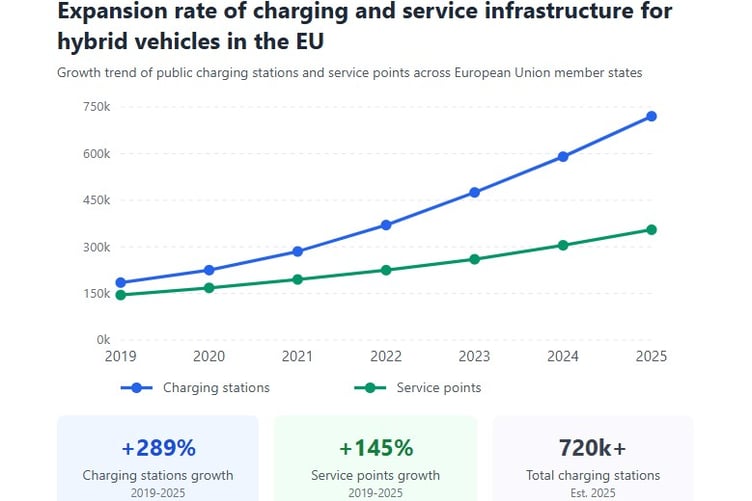
For families considering electric tow cars, infrastructure planning becomes essential. The steady expansion of charging networks across Europe reflects growing demand, with the UK seeing significant investment in rapid charging facilities along major motorway routes. However, towing with an EV still demands more careful route planning than conventional vehicles, particularly when hauling heavier caravans or equipment trailers. The trade-off between environmental benefits and practical range limitations means each family must weigh their typical journey patterns against current charging availability.
The decision comes down to honest assessment. If you tow twice yearly, hiring a suitable vehicle makes financial sense. But families who regularly transport equipment, enjoy caravan holidays, or frequently help others move find that a modest investment in towing equipment delivers years of expanded capability from a car they already own.
Sources: AUTODOC, British manufacturers' specifications, Caravan and Motorhome Club data.
Quick answers for family towers
Should I fit a towbar before I actually need one? Many families regret waiting until they need to tow something urgently. Fitting a towbar when you buy the car often costs less than retrofitting later, and dealerships sometimes include installation as part of the purchase package. Even if you only tow occasionally, having the capability ready means you can say yes to opportunities like helping friends move, collecting furniture, or taking spontaneous camping trips without scrambling to arrange alternative transport.
Does towing a caravan really affect my fuel consumption that much? Expect fuel economy to drop by roughly 20-30% when towing a caravan or heavy trailer, depending on weight and motorway speeds. A car that normally achieves 45 mpg might drop to around 30-35 mpg whilst towing. The key is matching your caravan weight to your car's capacity and keeping speeds sensible—staying closer to 55-60 mph rather than pushing 70 mph makes a noticeable difference to both fuel costs and stability.
Comments
We've recently changed our login process. If you have an account for commenting, you will need to re-register on the login window.
This article has no comments yet. Be the first to leave a comment.