

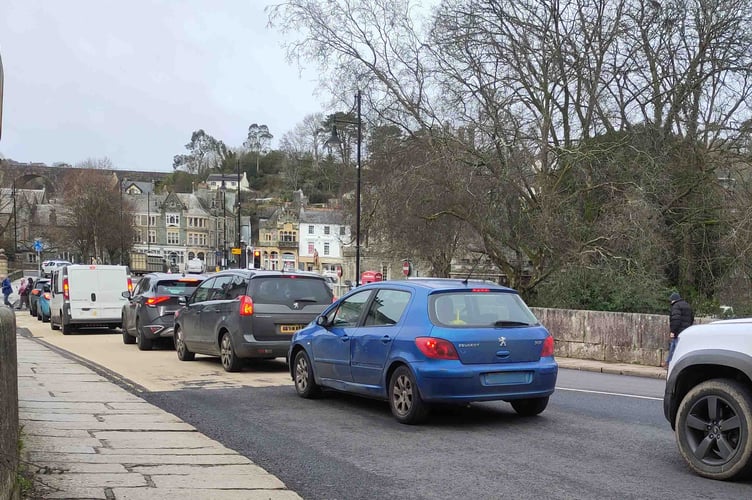
A shiny new car, with glamorous driver, sweeps along cliff top or through a city centre – or for the family market, loads of cheerful children and luggage. But why, weirdly, are there usually no other cars in sight?
Advertisers know their business, so the myth of the open road still appeals. But with over three hundred billion (yes, billion) miles a year – and rising - driven by vehicles in the UK, it’s not everyday reality.
Like it or not, when we drive we’re in a complex transport system linking everyone in the area who’s on the move. They’re in lorries, cars or buses; on foot, on bikes, mobility scooters or pushchairs: all human, fallible and trying to get somewhere.
Where does responsibility for this system lie? For infrastructure – roads with junctions, parking spaces, bus stops, crossing points? For the rules? Who checks how well it’s working? Improves it to fit changing times? If you’ve worked with a complex system – perhaps in an office or factory – you’ll know why that matters. The alternative is an outdated system, strained by extra parts added piecemeal, with problems fixed by short-term patches.




Symptoms of this in transport systems aren’t just the potholes. As reported in this paper, Okehampton’s new station won’t have loos because trains have them onboard. Yet it’s badged as an edge of town transport ‘interchange’ – with a walking, cycling, bus or car journey between the station and home or destination. Being realistic, that will challenge some passengers at both ends of the age range! While Plymouth station has facilities, it’s become harder to reach it from Tavistock without a car. Since timetable changes last year, Stagecoach bus no. 1 stops about a ten-minute hilly walk away from the station. Inconvenience using trains means more car journeys, so more congestion, so less reliable buses – a vicious circle.
Maybe those decisions came from focus on one constraint – project budget or trip time – rather than the system purpose. That is, according to Peninsula Transport, (the sub-national transport body), “a customer-focused, integrated public transport system that makes travel simple and accessible” across Devon and Cornwall. At least WCs and bus stops can be added in future. It’s more difficult to correct problems with transport to new homes – a topical issue in Tavistock.
While a planning application for a new estate includes a transport assessment commissioned by the developer, the predicted impact on nearby roads has to be “severe” to be grounds for refusal. Rules require a separate decision for each site, yet it’s the overall transport system in a town or village that enables or obstructs easy movement. So we support Tavistock Town Council’s call for traffic modelling of the whole town, so planners can assess individual and cumulative impact of housing sites. We hope it won’t just be about cars and roads. To be really useful, modelling should include ways to enable safer walking and cycling, and frequent, reliable buses all day long. Then we’ll greet new residents in the street, not glare at their cars on the road.

Comments
We've recently changed our login process. If you have an account for commenting, you will need to re-register on the login window.
This article has no comments yet. Be the first to leave a comment.