
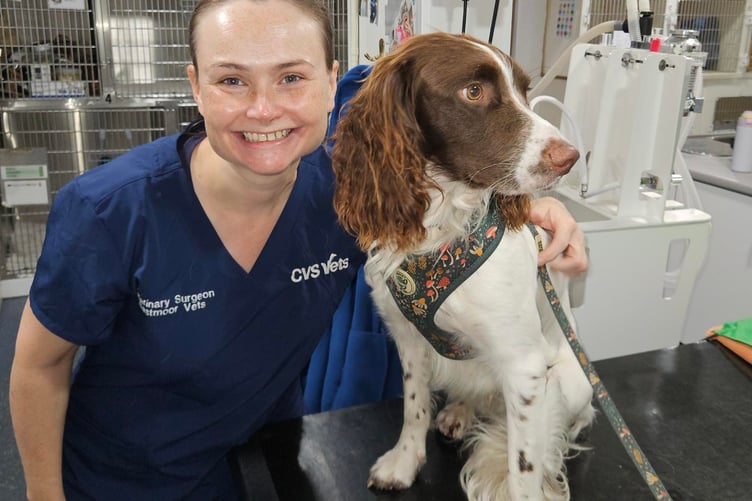
Many older pets could be living with undiagnosed arthritis, say vets and owners are urged to have them checked.
Many pet owners assume slowing down is a natural part of ageing, but vets at Westmoor Vets in Tavistock are encouraging owners to look closely, as subtle changes in behaviour, movement and daily habits could be signs of painful cat and dog arthritis.
The practice is highlighting the often-overlooked condition to help owners recognise the early signs of osteoarthritis in cats and dogs, one of the most common causes of chronic pain in older pets.
While arthritis is associated with dogs, it is also common in cats. Cats Protection, says 90% of cats aged over 12 have evidence of arthritis on X-rays, yet many cases go undetected because cats instinctively hide signs of pain and discomfort.
To help raise awareness, Westmoor Vets is sharing advice to help owners spot the warning signs and know when to seek support.
Kristina Chourot, veterinary surgeon, said: "One of the biggest misconceptions we see is that slowing down is simply part of getting older.
A dog that no longer wants to walk as far, hesitates before using the stairs, or takes longer to get comfortable may be experiencing chronic joint pain. Likewise, cats can show very subtle changes that owners often put down to age.
"The good news is that arthritis in cats and dogs can often be managed very successfully. The sooner we identify it, the sooner we can help improve a pet's comfort, joint health, mobility and quality of life."
Arthritis is progressive, causing inflammation, stiffness and joint pain in cats and dogs. Although incurable, veterinary care, pain management, weight control and lifestyle adjustments can help pets remain active and comfortable longer.
Dog owners should watch out for reluctance to walk or exercise, difficulty using stairs, stiffness after resting, sleeping more than usual, difficulty getting comfortable, weakness in the hind legs and changes in temperament or behaviour.

-stolen-from-a-hou.jpeg?width=209&height=140&crop=209:145,smart&quality=75)


In cats, arthritis is less obvious with them hesitating before jumping, taking easier routes around home, reduced grooming, less time playing, avoiding interaction, toileting outside the litter tray and sleeping more than usual.
Arthritis in cats is frequently missed because signs develop gradually and mistaken for ageing.
Kristina added: "Cats are particularly good at hiding pain, so owners may not see obvious signs such as limping.
"Sometimes the only indication is that a cat has stopped jumping onto a favourite windowsill, is grooming less, or seems quieter than usual. Owners know their pets best, so if something feels different, it's always worth seeking advice."
Westmoor Vets is encouraging owners of pets aged six years and over to have regular pet health checks and seek veterinary advice if they notice changes in mobility, behaviour or daily routines.
The team at Westmoor Vets is encouraging owners of pets aged six years and over to schedule regular health checks and seek veterinary advice if they notice changes in mobility, behaviour or daily routines.
Owners can read full arthritis guidance for cats at this link: https://www.cvsvets.com/health/conditions/arthritis-in-older-cats and dogs https://www.cvsvets.com/health/conditions/arthritis-in-older-dogs.
Comments
This article has no comments yet. Be the first to leave a comment.