
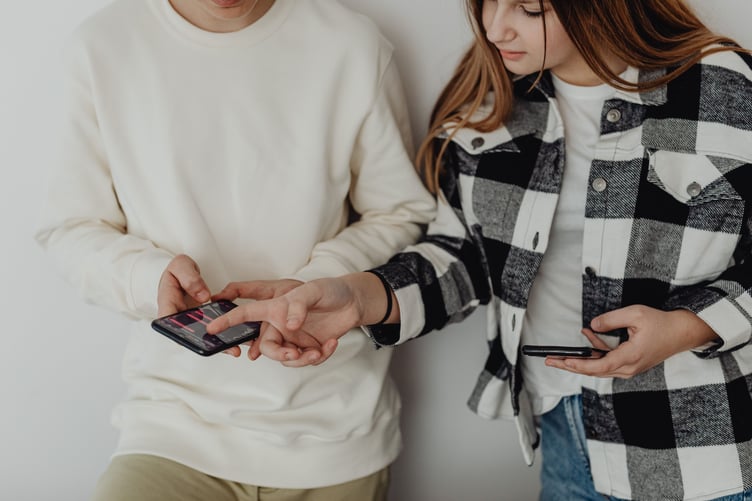
As the government begin outlining new legal restrictions on youngsters accessing social media, teenagers in Tavistock have been having their say on the issue.
Under the planned move, older teenagers in the UK will face an overnight social media curfew, the government has announced.
It would mean apps such as Instagram, TikTok and YouTube being set to be unavailable by automatically, default to 16 and 17-year-olds between midnight and 6am.
The government aims to lay the proposed curfew measures before Parliament by the end of this year, to take effect with the social media ban for under-16s next spring.
The government also wants so-called addictive features (such as auto-play and ‘infinite scroll’) to be set to disabled, saying the measures and the curfew will improve teenagers' focus, sleep quality and family life.
Youngsters at Tavistock Youth Café though are against the proposals, questioning why youngsters and not adults are being penalised and saying the restrictions will isolate young people socially and from educational material such as YouTube.
Tom, 13, said: "Who do they think made these toxic algorithms in the first place? Who designed the engagement loops that hook people's brains? Who is putting the harmful, dangerous, and toxic content online?
“It’s the older generations. The same generation of politicians who are voting to ban these platforms are the ones who built them, monetised them, and flooded them with garbage.
“Adults created the problem, adults are the ones behaving badly online, but somehow the solution is to punish the youth. So, their brilliant fix is to lock the kids out of it.”
He said it is a different world to when politicians were growing up: “The real world is more dangerous, so online spaces became the new park. You log on, chat to your mates in a Discord (game) call or a party, and log off. It’s safe, it’s controlled and it keeps you connected. But now they want to take that away too, leaving kids with nowhere to go.”




Tom said the ban was “backwards, lazy, not well thought-through and reckless”. Internet experts and platforms warned blanket bans drive youngsters from highly moderated, curated and supervised platforms onto anonymous, lawless, rogue sites without safety laws.
Grace, 15, said: ‘I don't think the government has really thought this through that much because people find their way around things, especially teenagers.
“There are VPNs [virtual private networks] to change the location of where you are, there are going to be ways around the ban. It shouldn't be up to the government to pick and choose how much screen time a child has, and what age they get to have that time. It should be up to their parents to pick and choose that.
“Sure some of us spend a bit to much time on our phones, but legally restricting that is going a bit far. I know for my GCSEs because I’m home-schooled I used YouTube a lot for videos to teach me things about biology, character analysis in literature, and other things like that. I think banning that for under 16s and not letting them use it all is taking away a learning utensil.”
Comments
This article has no comments yet. Be the first to leave a comment.