


WEST DEVON care companies have confirmed that the shortage of carers has ’never been as bad as it is now’ as 2,000 jobs to care for the elderly remain unfilled countywide.
Local care companies spoke of their heartbreak at not being able to fill vacancies, as Devon County Council held a crisis conference to discuss a way forward.
Health leaders, care providers and local political leaders got together in Exeter last Friday (December 3) to hear the first-hand experiences of care workers and their employers.
Tavistock company Home Instead was among them. The company provides care for people in their own homes throughout West Devon and the Tamar Valley.

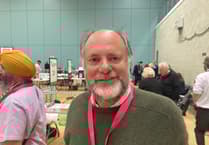

’There is a huge shortage,’ said owner Lynn Roddy. ’People are going without care left, right and centre.
’We are turning people away every day. We are having to do it all the time because we haven’t got the people to meet the demand. We are constantly looking for more people to join the sector.
’It has never been as bad as it is now. We’ve come out of lockdown and we can’t keep up with the endless phone ringing, and at the end of the phone is a very very vulnerable person or family. It is heart-breaking to turn them down, really really hard.’
Meanwhile Pauline Hilton, owner of Devon and Cornwall Care, which provides care to people in their own homes in the Okehampton and Tavistock areas said she had never known the situation so bad in 20 years in the business.
’There are just no carers out there wanting to care,’ she said. ’We have been advertising and no one is applying for the jobs.’
’It means we are not picking up the jobs because we can’t put more pressure on the carers we have got and we don’t want to lose the ones we have got. I have run this business for 20 years and this is the worst it has been in that time. Before, we would always have somebody interested in doing care but now there is no one out there.’
She said the issue of carers’ low pay needed addressing, but so did the issue of who would pick up the tab.
’They are worth £15 an hour, but where does that money come from? Someone has to pay for us to be able to pay that sort of money. It is really sad. If we were paying £15 an hour we would have so many people to choose from.
’There is a lot of negativity, but at the same time the staff we have got are very very supportive, they are doing the work. They are what I call proper carers. They get on with the job and support the clients, but they can only do so much.’
Councillor James McInnes (Conservative, Hatherleigh & Chagford), Cabinet member for adult social care, suggested there needed to be a cultural change on how the profession is viewed.
He said: ’I think the NHS has been absolutely brilliant through the pandemic and everybody recognises that, but the other side of the equation is how brilliant those in adult social care have been.
’People have been going into people’s homes to support them and have been supporting people in old people’s homes etc - and we need to rebalance. We need to be congratulating the whole system and those people that work in adult social care really do need to be appreciated just as much as those who work in the NHS.’
Following the inquiry, Cllr McInnes said the council plans to work with Devon’s MPs to change the national mood on the issue, adding the Government is ’still reluctant to put those in adult social care on an equal footing in terms of their importance, and you can’t talk about the NHS without talking about adult social care’.
He accepted that wages need to go up, along with ’changing the dynamics’ in the industry - such as more training to produce a better-qualified workforce and to enable more people to view social care as a long-term career.
’For far too long in this country we’ve looked on people who work in adult social care as poorly paid - often a stopgap situation until [they] find something else to do. Now that is not right, it’s a profession in its own right.’
But Cllr McInnes, who’s also the deputy leader of the county council, warned: ’It is going to be difficult. This isn’t just issuing a press release and doing a few interviews and everything’s going to change. This is going to be a cultural change that’s actually going to take place over a number of years.’
He disagreed with the suggestion that the council could take some services in-house if the care providers continue to struggle to fill vacancies. ’We haven’t got a magic bunker of people we can suddenly get out to do these jobs, we’re in the same position as everyone else,’ he said.
Comments
This article has no comments yet. Be the first to leave a comment.