

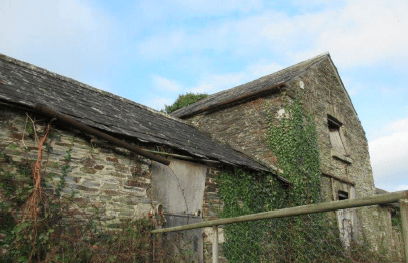
Proposals have been drawn up for the next stage of work on historically important barns at Crowndale Farm – Sir Francis Drake’s birthplace – on the outskirts of Tavistock.
The trustees for the Crowndale Farm Estate have applied for listed building consent (application no: 0142/26/LBC) for roofing work and masonry repairs to the stable barns and other adjoining barns.
The emergency work has already gone ahead with the approval of the local planning authority.
The barns, which are part of a Grade II-listed farmstead dating from the 19th century, built as one of the Bedford Estate’s model farms during the mining boom in the town.
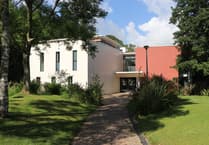


While the farmhouse is separately rented out, the adjoining barns – important architecturally - are in a state of disrepair.
Because money is tight the repairs are being done gradually – with emergency work to ensure that the roof does not collapse including corrugated iron sheeting.
The application is partly retrospective while also seeking permission for work to be carried out over the coming year, including installing timber joists, repointing stonework, making structures safe and installing powder-coated cast aluminium guttering. There are 16 barns in total and the aim of the work being to prevent deterioration with the site.
The site has historic links with famous seafarer Sir Francis Drake who was born at Crowndale in 1540 to parents Edmund and Mary, who were the tenants of the Duke of Bedford. While the at an older farm building in a field to the south of the site.
The current farm dates from the 19th century and was one of the Bedford Estate’s model farms during the mining boom in the town.
The buildings now are included in the Tavistock Conservation Area, with the 2025 Conservation Area Management Plan stating that Crowndale Farm was worthy of protection as a model farm which was built by the Bedford Estate using the knowledge gained using waterpower in the local mines.
“Water from the canal was used to power the threshing barn and other agricultural activities,” it states. “The stable range likely housed working animals used to tow canal barges, possibly in association with the mine. Whilst the present buildings were erected 300 years after the birth of Francis Drake, the connection is of local interest.”
The current work to the stable barns follows work on the Mill Barn, which was prioritised for restoration in 2020 after the roof partially collapsed.
None of the barns, which are grouped around a courtyard, have public access but they can be viewed from the public footpath along the towpath beside the canal.
Comments
We've recently changed our login process. If you have an account for commenting, you will need to re-register on the login window.
This article has no comments yet. Be the first to leave a comment.