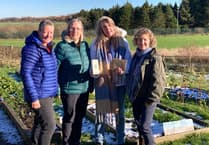
WHEN it comes to helping West Devon wildlife, individuals and organisations have been happy to flock together to help out a birdwatching ornithologist in Princetown. It was Susan Wallace, of Downlea in Tavistock, who got the project to take off when she wanted to get rid of her old wooden shed. A conversation with George and Julie Harris of the University of the Third Age gardening club soon found the perfect 'roost' for her wooden shack. They told her that fellow U3A member Paul Stubbs of the British Trust for Ornithology needed a shed for his garden in Princetown to help with his bird studies. First the 10 ft by 12ft structure had to be transported from her garden. The team were joined by her garden maintenance man Des Martyn, who kindly offered the use of his lorry. Susan's son Jamie, home from his town and country planning studies at Newcastle University, also joined in. Unfortunately they found that the shed was too big to taken in one go. But not to be put off by such a minor problem, the team called in some expert help. Builder Richard Downing of Gulworthy stepped into the breech and used his talents to help to dismantle it; the shed was then later loaded onto a lorry and transported to Paul's house in Princetown. When Susan told two Tavistock firms what they were trying to do they also decided to take the wildlife project under their wing. Focus DIY store manager Andrew Pollard was happy for his store to donate two, five litre cans of wood preservative and roof felting, while Dave Lister, the store manager of Travis Perkins, pitched in with three sheets of wood for the floor. Susan said: 'It's a very nice social gesture, working together to help Paul with his studies. 'I was delighted when Focus and Travis Perkins wanted to get involved. It's so good that all these people have given their time and skills when they heard what it was for!' Mr Stubbs, who has been a BTO member for 37 years, will use the shed — with other Dartmoor study group members in the area — to study, weigh and ring birds before releasing them again, so statistics can be built up to help his organisation in conservation work. Paul is one of more than 2,000 bird ringers in the country but the only one in Dartmoor. More than 42 species, including finches, sparrows and siskin, while rarer breeds such as the lesser redpoll and the firecrest have also been monitored. Paul said he much appreciated all the effort everyone has gone to to provide the shed. He said: 'It has been totally overwhelming. I can't believe the generosity and help of people, who all have been fantastic, not least of all Sue who organised it all.'