
DARTMOOR National Park Authority's development management committee last Friday granted 'temporary' planning consent for continued change of use of the Cramber Tor training area for military dry training.
The request from the MOD for permanent permission had been fiercely opposed by pressure groups such as the Dartmoor Preservation Association and the Open Spaces Society, who feared mock battles involving up to 700 personnel at a time could be staged on the moor.
DNPA committee members eventually granted temporary permission for use of the tor by the MOD, for a period of 40 years and subject to a number of conditions to control the impact of that use.
Bill Hitchins, chairman of Dartmoor National Park Authority, said it was the first time the authority had considered a planning application for military training at Cramber Tor, above Walkhampton Common on south west Dartmoor.


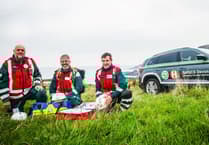
Mr Hitchins said: 'The authority has considered the environmental statement submitted by the applicants, the results of monitoring studies into military use of Cramber Tor, and listened to the views of the public and other consultees.
'In granting a temporary permission, we have balanced the need for military training to support and equip our armed forces, with the long-term purposes of the National Park.
'We have imposed a set of conditions which will enable the military to train and for the National Park Authority to monitor and control the environmental impact of that training.
'Whilst accepting that the case is currently made out for training at Cramber Tor, the authority has not granted permission in perpetuity. The temporary permission granted means that there is a long term stop date, and allows an opportunity for formal re-assessment of the case for continued training at that date.
'I sincerely hope that there will come a time when the military no longer needs to train on Cramber Tor as it hopefully means we live in a more peaceful world. Until that time, we will continue to work with the military to minimise their impact and ensure the public's enjoyment of this special place is not spoilt.'
James Paxman, chief executive of the Dartmoor Preservation Association, said: 'Naturally we are disappointed that activities which have the potential to be damaging to national park purposes —digging, pyrotechnics and low flying — will continue with largely unchanged controls. Therefore there remains the threat that at some future date considerable intensification can occur within the permitted limits. We had hoped that this threat could be mitigated.
'There are some positive aspects to the outcome. At least this is a temporary permission, albeit for a considerable length of time.
'The predominant feeling was that although the current generation was prepared to allow military interests to prevail, they were not prepared to bind a future generation to the same decision.
Mr Paxman said some minor changes to conditions were agreed. For example, exercises involving more than 350 troops would have to be notified to DNPA in advance.
'But overall, there still remains the potential for very significant intensification of training activity within the conditions attached to this permission,' said Mr Paxman.
Kate Ashbrook, general secretary of the Open Spaces Society, said: 'We are relieved that Dartmoor National Park Authority has decided against a permanent permission for dry training at Cramber Tor. We are pleased the members challenged the advice of the officers and resolved that the permission should be temporary. The members did what they could to uphold national park principles, recognising that military use of the national park conflicts with the protection of natural beauty and promotion of public enjoyment.
'But we are sorry that the consent is for 40 years, which seems a lifetime and is hardly "temporary". We must hope that the military does not intensify its use of this area during that period, as the planning conditions would seem to allow it to do so.'
Comments
This article has no comments yet. Be the first to leave a comment.