

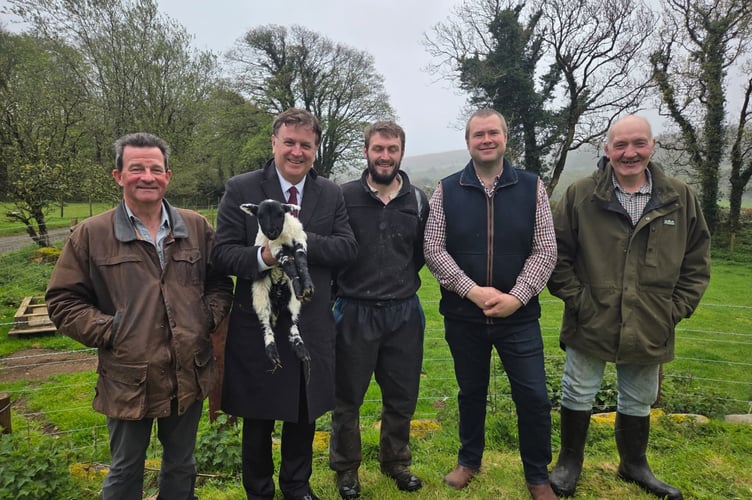
The South Tawton Commoners Association has recently raised concerns about the long-term impact of the new land management schemes on the future of moorland farming.


The old system, known as Higher Level Stewardship, paid farmers for managing their land in an environmentally friendly way, but under the new system, farmers will be paid for carrying out specific environmental activities and outcomes, which the Commoners fear will not fit traditional Dartmoor farming methods.
With many farmers relying on funding from land management schemes, the Commoners have argued that the new scheme may make farming on the moorland financially difficult. The national rules are based on average farmland, but Dartmoor land is rougher, less fertile, and managed with more traditional techniques, which may not match the requirements of the new scheme.
Jim Mawle, chairman of the South Tawton Commoners’ Association, said: “There is real uncertainty about the future of environmental schemes and how they will work in practice on Dartmoor. We hope this discussion will help ensure policies are flexible enough to support sustainable farming and protect our landscape.”
Sir Mel Stride, MP for Central Devon, recently met with the Commoners to hear their concerns. The Commoners also discussed the Dartmoor (Fursdon) Review with him. The review highlighted the need to improve the Dartmoor environment while balancing farming, conservation and public access.
Sir Mel Stride said: “It was extremely valuable to meet South Tawton Commoners and hear directly about the challenges they are facing. Upland farming is essential not only for food production, but for maintaining the landscapes that define this part of Devon. It is vital that policy strikes the right balance and supports farmers in delivering both environmental and economic outcomes.”
Comments
This article has no comments yet. Be the first to leave a comment.