
YOU could call it the Seven Year Itch ? except no one is scratching.
Landmark birthdays tend to spotlight the 18th or 21st, or numbers neatly rounded off with a nought to denote passing decades. So why celebrate a seventh?
?Why not?? would be Tavistock Wharf managing director Margaret Hurdwell?s response. If seven years has been a yardstick to measure diminishing marital returns it can, conversely, also be a period to assess achievement.
On Saturday the present management team will have been at the helm for seven years. No mean feat for a community arts centre that nearly sank under the weight of debts in its early days.
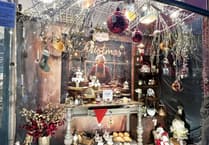


So there will be raised glasses and a modest celebration which owes more to an astute sense of survival than any self-congratulatory back-slapping.
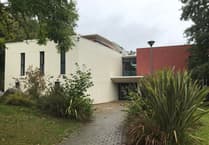
The Wharf was officially opened in February, 1995. It closed in July that year and fell empty for six months. West Devon Borough Council put it out to tender ? and the 16 applicants were whittled down to three.
?Our company, CAM, was the only one that would take on the debt. You had to be completely barmy to take on a huge debut of nearly £200,000, the over-spend from the previous management,? says Margaret, recalling what many would see as a certifiable undertaking launched through misguided optimism.
Following five years of servicing this debt, at a cost of some £50,000, the company then approached West Devon Borough Council asking if they would write off the debt ? and they did.
The Wharf?s financial struggles were at last on something akin to a level playing field.
?We had this huge passion to want the Wharf to succeed ? and so far it has! Our bloody-mindedness comes from our determination to make it work,? says Margaret.
?We did a five year business plan ? and to remain here for five years seemed phenomenal! After seven years we have become such an asset for Tavistock and West Devon that I don?t think the area could think of itself without the Wharf. That is what we are proud of.?
The four directors, Margaret, her husband Peter, Gordon Brown and Peter Dixon, like the great majority of people involved in the Wharf, are volunteers and collect no wages.
Margaret says she could not over emphasise the value of the work the volunteers do. ?Without them the Wharf would not exist.?
?If we paid ourselves we would close, but we do pay our key staff. We get no revenue funding, but West Devon Borough Council supports us with exemption from rates. They also allow us a peppercorn rent for our 35 year lease, and, most importantly, give us their moral support.?
Margaret moved to Tavistock 13 years ago, having previously been a headmistress of an independent school that fortuitously had a theatrical leaning.
Her husband Peter got involved in the Wharf and became CAM?s first managing director ? but had to step down because of career commitments.
Margaret had already been working at the Wharf under the original management. She was on the box office the day the arts centre was closed ? and still remembers her shock at such sudden finality.
Her soft-spoken voice and easy manner belie a steely determination. By her own admission she can be a ?pushy person? ? a useful asset when having to stand her ground against equally pushy agents.
Following her first foray as a volunteer she set up the trading company for the Wharf restaurant and bar. From there she propelled herself onto the board, becoming, in due course, managing director.
At the beginning Margaret combined the role of housewife, mother of four and supply teacher with doing a master?s in philosophy of education at Marjon.
?My dissertation had to be finished in March and we started here in February ? and I knew nothing about commercial catering!?
However, her positive approach would not allow initial ignorance to prevent achievement.
?People say if you put your mind to something you can do anything ? and if your back is against the wall you get on with it,? she says.
?I believe if you have the business side under control you can learn the arts. One of the reasons that so many venues like this go down the drain is because they don?t realise it has to be first of all a business. Without revenue funding, which we don?t have, we have to be commercial,? says Margaret.
When it comes down to the financial nitty-gritty her renowned no nonsense approach has earned her the tag ?Ayotallah? from some acts.
?Every deal has to be commercial because we cannot do it just on artistic merit. I have to be absolutely steely when negotiating with agents. I?m business-like about it. We have a good reputation for being straightforward. People know where they stand.?
The Wharf tries hard to give the public what they want, although admits it might not be as near the cutting edge of art as it could be. But that is due in part to a wider balancing act.
The aim is to put on broad-based entertainment for a broad-based audience ? a strategy of programming that has proved largely successful. ?We feel we may be a bit fuddy-duddy compared to the arts world ? but we are still here,? maintains Margaret.
?You cannot book the programme on personal choice. It is so difficult to get rid of an awful reputation and so easy to get rid of a good one. We are very concerned about the importance of customer care.?
Performers too, enjoy the Wharf experience. Many ask to come back and the growing reputation is such that agents are increasingly approaching the Wharf for bookings instead of the other way around.
There are 40 live shows at the venue each year, and in the last seven years 350,000 people have passed through the doors for performances, to visit the gallery, restaurant or simply have a drink at the bar.
Surely a seven-year success story.
?You have to love the Wharf. All we get back from the Wharf is the fact that it is still open. We don?t get any money.
?There has to be job satisfaction or else we wouldn?t continue. Seven years on and we are all optimistic and still enthusiastic about what we are doing.?
And wouldn?t anyone want to raise a glass to that?