
Sam Hughes reports on how MacMillan Cancer Support gives invaluable support to cancer sufferers and their loved ones.
IT is hard to find someone that has not been affected by cancer in some way, whether directly or through a relative or friend, when one in three people nationally suffer with the disease.
Being diagnosed with cancer can be for many the toughest obstacle life will throw at someone, not just for the sufferer dealing with the physical effects but for people surrounding them, who have to cope with the emotional, psychological and financial effects cancer brings with it.
Through these difficult times, help is invaluable and organisations such as Macmillan Cancer Support are striving to make life with cancer a little bit more 'normal'.

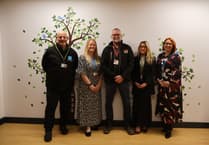


Someone who has experienced first-hand the help and support that Macmillan can offer, is Emma Taynton-Young from West Devon, whose father John Taynton died from bowel cancer in February 2011.
'I don't think people realise how Macmillan can help the people who don't have cancer but are affected by it,' said Emma. 'I really don't think my family and I would have got out the other side as well as we have without their help.'
Emma and her family moved down to West Devon to be closer to her father during his two year battle with the disease. She said he was a private man and although she knew he had cancer, she was not fully aware of what it entailed. Emma made the most of the free helpline to help her cope with the changes.
She told the Times:?'I think one of the hardest things was for him to admit it. His wife had given up work to look after him but he tried to carry on as normal. He had a Macmillan nurse who allowed him to have as much quality of life as possible, helping him with the practical things. I know the support the nurse gave to him and his wife was important — she played an important role in their lives.
'Before we moved down here I was scared about seeing him. I didn't know what I would say to him and didn't know if the cancer had changed the way he looked, whether he would still look like my dad. But Macmillan helped with preparing me for that. They suggested "face-timing" him so I could see what he looked like first or asking someone who saw him regularly if there were any changes to his appearance so it wouldn't be such a shock.
'It was tough when he was in pain but wouldn't admit it. I remember coming home one day and arguing with him because I didn't know what was going on. I phoned the Macmillan helpline because I needed to understand what was happening. They explained what the cancer could do, how it would affect him and they were brilliant for helping me to understand it. It helped my relationship with my dad because I had more of an idea of what was going on.'
Emma said the helpline also helped her to explain her father's condition to the elder of her two sons, who is now seven. Her other son was only a baby.
'My son was quite young at the time and I didn't know how to explain the situation to him. We moved down here when my dad was diagnosed, so he went from speaking to his granddad on the phone to seeing him everyday — how was I supposed to explain to him that he was going to die?'
Macmillan helped Emma to deal with the conversation, giving her advice such as bringing the topic up in normal conversation while doing something like cooking together rather than sitting him down in a quiet room to talk about it.
'My son was really balanced about it and dealt with it really rationally. After my dad's death, I was sat on the stairs crying one day and he sat beside me and asked if I was crying because granddad was dead — then he said "but I'm still here". I could not have done it without the support line.'
Since John's death, Emma and her family have done what they can to support Macmillan. They held a successful coffee morning, which raised £750.
'It was my way of thanking Macmillan not only for what they had done for my dad but for us too. I was blown away with people's generosity; we had thousands of pounds worth of raffle prizes donated along with cakes. You realise then how many people are affected when you mention Macmillan.
'I never realised there was support for families — I knew there was support for his wife but didn't know it was for other family members too.
'It is a free helpline and they really listen to you and give a tailored approach — they're not just ticking boxes. You deal with real people who don't mind waiting on the line for five minutes while you cry — they're invaluable, and its free.
'The shame is people don't tend to support Macmillan unless they have used the services. I genuinely know I couldn't have got through it without them.'
Sian Ward-Edwards, Macmillan fundraising manager for Plymouth, North Devon and the Tamar Valley, said there is a higher than average cancer rate in the South West, with around 67,000 people living with cancer in Devon and Cornwall alone.
She works in a fundraising team of four people, who give support to other people raising funds for the charity.
Sian said: 'We have invested in 120 Macmillan professionals in Devon and Cornwall alongside funding staff and the expansion of the Mustard Tree Macmillan Centre at Derriford Hospital in Plymouth, which is a drop in centre.
'At the centre there is access to counselling, bereavement counselling, support groups and there is a welfare and benefits officer who has claimed back over £2-million for people. The services are for anyone affected to use, including families and loved ones of someone with cancer.'
Sian said the Mustard Tree is not a clinical place like the rest of the hospital but is comforting and homely. Staff from the Mustard Tree regularly visit Tavistock Clinic as part of the Triangle Centre Outreach Programme.
'Macmillan also gives out financial grants to people in need. We have given out £94,000 across Devon to families that are affected and really in need. People may have had to give up work because of their cancer, but still have a mortgage to pay and children to care for.'
She said that people often find lots of extra expenses add up such as travelling to and from the hospital, parking fees, petrol, etc.
'As a team, we are trying to raise £1.3-million this year but Macmillan will spend two and a half times that in Devon and Cornwall.
'There are 67,000 people living with cancer in Devon and Cornwall and that amount is going to double in the next few years, so we need a lot of services. We really need to raise more money if we need to reach more people, and we are totally reliant on donations. So many people are supported and touched by our services. There are so many people living with cancer and so many more that will need our help that we need to grow, but to do that we've got to get more services available and that all costs money.'
Sian said that she feels her challenge is making people aware that help is available locally.
'When someone is diagnosed with cancer it affects everyone around them — family, friends and even work colleagues. It has a really devastating effect on people. The challenge for me is showing people how we can help locally and how we make a difference in the community.'
• Anyone who would like to support Macmillan or would like to know more about the services it offers can get information via http://www.macmillan.org.uk">www.macmillan.org.uk
Comments
This article has no comments yet. Be the first to leave a comment.