

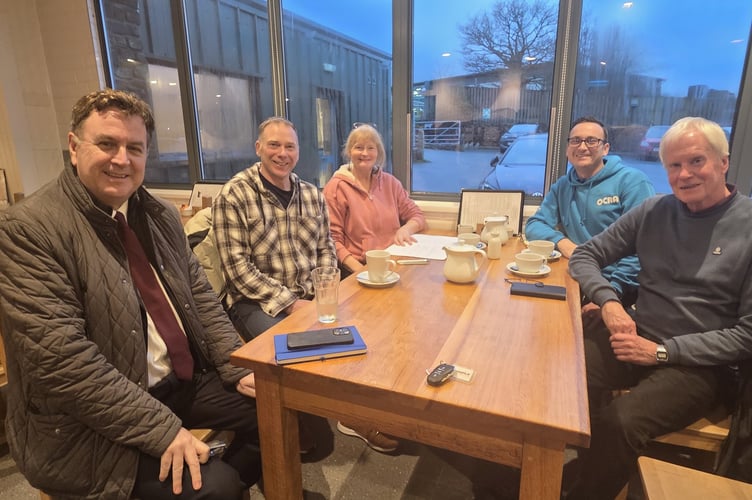
Recently I met representatives of Okehampton Hockey Club and OCRA to discuss the future of the all‑weather pitch in Okehampton. This is a vital community asset that supports competitive hockey, school sport and informal recreation for people of all ages. Without it, opportunities for local people to be active will shrink and the impact will be felt far beyond the club itself.




Across England, around 140,000 people play hockey regularly in club competitions and many thousands more take part through schools and informal games. Nationally, roughly 166,000 adults are now playing field hockey at least twice a month, a number that has been edging up in recent years despite the many pressures on local sport. Yet these encouraging participation figures rely on one basic ingredient. You need somewhere decent to play.
All‑weather pitches are not cheap to build or to maintain. They need careful management, resurfacing every few years and investment in floodlights, fencing and changing facilities. The Government often talks about record funding for grassroots sport, highlighting headline figures of hundreds of millions of pounds of investment in local facilities across the UK. In principle, this is very welcome. In practice, too many communities still struggle to access the support they need, and too many applications are caught in slow, centralised processes that do not reflect local urgency.
At the same time, the national picture on physical activity should be setting alarm bells ringing in Whitehall. Sport England’s Active Lives data show that millions of adults remain inactive and that children from less affluent backgrounds are significantly less likely to meet recommended activity levels. We know that regular exercise cuts the risk of major health conditions, saves the NHS billions of pounds over time and improves educational outcomes. Yet we still see a lack of consistency from central government when it comes to long‑term planning for facilities, particularly in rural and semi‑rural areas like ours where travel options are limited and alternatives are few.
That is why the future of Okehampton’s all‑weather pitch matters so much. It is exactly the kind of facility that national strategies claim to support: multi‑sport, community‑focused and open to schools, clubs and casual users alike. Letting it decline or disappear would run directly against the stated aims of getting the country more active and reducing pressure on the NHS. I will be working with Okehampton Hockey Club, OCRA, local schools, the town and borough councils and potential funding partners to make the strongest possible case for investment and for a sustainable plan that secures the pitch for the next generation.
I came away from our meeting impressed by the passion and commitment of everyone involved. My job now is to back that up with practical support, to press where necessary, and to bring people together locally to get a solution over the line. Okehampton deserves facilities that match the ambition of its young people and volunteers. I am determined to do everything I can to help restore and improve this crucial community resource.
Comments
We've recently changed our login process. If you have an account for commenting, you will need to re-register on the login window.
This article has no comments yet. Be the first to leave a comment.