

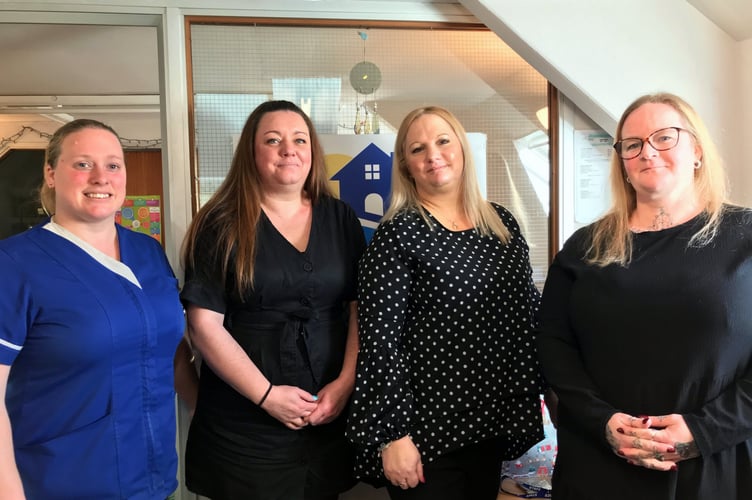
THE BOSS of a local care company which looks after people in their own homes has made an appeal for more Government funding so she can recruit for her vital service.
Janine Wiles, manager and owner of Tavy Care, said staff did much of the same work as nurses would have done 20 years ago – including changing catheters, giving medication and providing end of life care – and should be paid more but this needed Government funding to do this.
She stressed that she currently had a brilliant committed team but like other home care companies nationwide, she was struggling to recruit the right staff.
Janine said: ‘The answer is more staff. I am getting applications but I had 11 interviews last week and only a few turned up, so there were a lot of timewasters out there. We need to get more people and we need to champion social care as a career choice because it is skilled work.’


A sticking point is rates of pay, as with all the public services who are striking at the moment. Tavy Care pay £11 an hour and £11.75 at weekends, with £10 an hour for travel between jobs, and 45p mileage rate. Janine says that the job is worth £15 an hour, but she can only pay what the local authority will cover.
‘We can only pay what we are paid by the local authority and we need central Government to put more funding into social care to enable us to carry on providing this service.
‘It is a very highly skilled job. We do a lot of the things that nurses do. Twenty or 30 years ago, it was going into people’s homes and making a cup of tea. Now it is looking after stomas and catheters and end of life care, pain medication, all that used to be what nurses did.’
Naomi McGowan, deputy manager for Tavy Care, said: ‘In terms of a job role, it is very complex and highly skilled, which is why it is now a career and not just a job.’
She added: ‘It is definitely not a job for everyone, you have some people who think it is easy – those are the ones that don’t last, because it is not easy. The ones that think they can’t do the job are the ones that thrive.’
Young people often came to work for Tavy Care a stepping stone onto nursing or another heathcare role, and it gave them a good grounding, Janine said.
She wants to stress the positives of a demanding, but rewarding job – she started in care at the age of 13, and it is this which has kept her there.
‘I think that although it is emotionally challenging, it is also emotionally rewarding and that bit gets forgotten.’
Gill Holloway, deputy manager of Kensey Care, Tavy Care’s sister service around Callington and Launceston in Cornwall, said the satisfaction for her came from helping people stay in their own homes. In many cases, they provide respite for couple where one partner is the long term carer of the other, often with dementia.
‘Their commitment to each other is absolute and although they are struggling they want to honour that commitment. We are enabling them to do that and support them.’
Ultimately that means that like nurses, care work needs more money from the Government to care properly for the ageing population in the years ahead.
Naomi added: ‘They have got to take a look at the true cost of care and see how much it costs providers to come out and provide a good standard care to people in their homes, because if you want to get those hospitals clear and reduce hospital admissions you have got to increase the workforce in social care.
Wages, she said should rise, ‘I would say £15 plus an hour, especially where we live, in this rural area, because of the transport costs.’
Janine said despite everything she was grateful for the team that she has, as it takes special qualities to be a carer, and there is a nationwide shortage of them. ‘Every day you hear of someone pulling their hair out from a management point of view. I read some of it and think actually our team is really really good. It brings it home to me that our situation really isn’t that bad. We just need more like them.’
Comments
This article has no comments yet. Be the first to leave a comment.