
IN August this year the world will mark the centenary of the outbreak of the First World War, a war which saw few people unaffected.
Men and boys went off to war, women stayed behind and picked up the pieces, going off to work in ammunitions factories or working on farmland, while children grew up without their fathers, brothers and uncles.
An appeal in the Times in January asking for people from the West Devon area to share their stories or information of their relatives in the First World War brought in life-changing stories of heartache and hardship.
Men, in their millions, sent to fight in places they had never heard of before, saw the beginning of modern warfare, including chlorine gas, first used by the German forces at the Battle of Ypres.

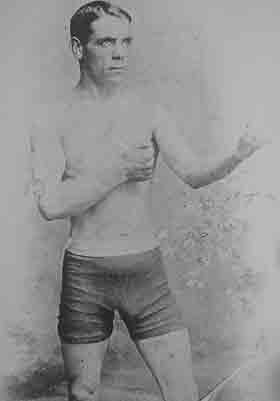
One local man from Buckland Monachorum remembers his grandfather Thomas Bridgeman, who died at the Battle of Ypres after being gassed by chlorine.
He did not die instantly, but later in hospital, on May 2, 1915.
Gus Thurston said his grandfather was born around 1880, so was actually a lot 'older' at almost 35, than other recruits for the war.
He said: 'My grandfather was a Royal Marine but left and became a professional boxer in Plymouth.
'When the Canadians came to Plymouth, they did a recruitment drive and my grandfather was chosen, I think due to his experience.'
Gus said his grandfather's sign-up sheets said his date of birth given to the Canadian force was November 8, 1884, so it was possible he lied about his age to the regiment, in order to be chosen.
Gus said: 'One of the reasons he probably wanted to go back in the forces was the chance of a steady job, as employment at this time was very different.
'He worked at the dockyards during the day carrying coal, then trained and fought as a boxer in the evenings.'
When Thomas went off to war, he had a wife and three children at home, and a fourth child on the way — a boy born six weeks after he died.
Gus added: 'An interesting fact about my grandfather was when he was a boxer, but past the age, he was asked to look after Jack Johnson, who later became the first black heavyweight champion. Jack Johnson was a notorious womaniser and they asked my grandfather to make sure he got to his fight in Plymouth on time!'
Thomas Bridgeman is buried in Wimereux, France.
Almost six months after the death of Mr Bridgeman, the Okehampton area was saddened by the death of Captain W H German, the son of its then mayor, W B German. He died in November 1915 aged 29.
The newspaper cutting from March 21 explained that the week before, Mr and Mrs German had received a telegram from the War Office to say that their only son, Captain German, had been dangerously wounded in Mesopotamia.
Then on March 20 his parents received a letter explaining that he had died from his wounds.
Captain German was in action on March 8 when he and so many other brave officers lost their lives.
The Okehampton town felt the loss of Captain German, due to the close ties Mr and Mrs German had with the town at that time.
Mr German was in his third period as mayor of the town, and was chief magistrate when the Simmons Park was opened by the Lord Mayor of London.
Captain German's mother was the daughter of the late Rev Henry Trigg, an able minister, who for many years was the esteemed pastor of the Okehampton Congregational Church.
Captain German was educated at Moorside School and at Exeter, and subsequently entered the extensive boot manufacturing business founded by his grandfather and built up by his father.
He was devoted to dogs, and loved outdoor exercise and nature.
He was a member of the Okehampton Golf Club and gave promise of becoming a good player. He was fond of music and was said to have a good voice, and was a member of the Okehampton Choral Society, and took an interest in the concerts.
In the report of his obituary it was said that he was quiet, retiring, faithful and attached to his friends — 'he was the soul of honour and was straight as a line'.
Of his brief military career it was stated that he took his Army life very seriously and was scrupulously attentive to all the work and when the 'nation's hour of trial came he was not wanting'.
Before the expedition left for Mesopotamia he was promoted to captain.
He was said to be glad of the prospect of active service .
• Does your family have memories, photographs or artefacts regarding West Devon servicemen who fought in World War I? Share them with Times readers by emailing Lindsay Turpin at [email protected]">[email protected]
Comments
This article has no comments yet. Be the first to leave a comment.