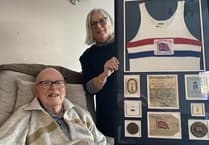
NINETY-three year old Charles Voss was not the only person celebrating this summer ? staff at Harewood Intermediate Care Unit in Tavistock where he had been cared for, were also celebrating the service?s fifth birthday. Charles? story is featured in the autumn edition of Devon Talk, the residents? magazine produced by Devon County Council with Devon and Cornwall Constabulary and the Devon Fire and Rescue Service, distributed last month. The article describes Charles? recovery from a hip fracture, and his return home following a period of rehabilitation at Harewood House. He was referred there following a hip operation at Plymouth?s Derriford Hospital. Charles said: ?I was pleased to be referred because Harewood is not far from my home and wider family members.? Charles arrived by ambulance, and following his operation could walk only with the aid of a frame. ?Staff were very caring and very competent, and the food was good. If I had any problems, they took care of them very efficiently,? he said. ?Staying with people who care really mattered to me when I felt at my most vulnerable.? Charles was visited regularly by a [hysiotherapist and given daily exercises to strengthen his hip, and after six weeks he was fit and ready to return home. ?I?m walking with the aid of a stick, and now I?m home I?m still being visited by the physiotherapist and keeping up my exercise regime.? Tavistock?s Harewood Intermediate Care Unit opened in June 2000. It is a joint initiative between Devon County Council?s Social Services and South Hams and West Devon Primary Care Trust. In its first five years, the service has helped approximately 260 people back to independent living. The service aims to help people to reach a level of independence whereby they can return to live at home. People are referred to the service from Health or Social Care professionals when they are assessed as being in need of assistance and rehabilitation because they have been unwell, in hospital or perhaps are just not managing well at home. A typical stay is usually for up to six weeks and in that time a client may receive physiotherapy, occupational therapy, and speech and language therapy. Clients are individually assessed and goals set specific to their need, for example cooking meals, climbing stairs, and confidence building. Devon County Council and the health authority are working closely to provide similar services that help people regain independence after a temporary setback. In many instances intermediate care is preventing a need for people to go to hospital in the first place. It is also helping people when they leave hospital and before they can safely return home. For more information about intermediate care, contact CAREdirect on 0800 444 000.