
SHE is the last living link to the First World War. Dorothy Ellis of Iddesleigh was married to veteran Wilfred for 40 years before his death in 1981 — a loss she still feels keenly. And it was to her that he confided his grim experiences in the trenches where he was shot and gassed. Initially reluctant to burden her with the horrors of war, Dorothy says she had to prise details from Wilfred. 'I was a good listener. That is why I got so much information,' said Dorothy, 92. 'I would ask questions. And sometimes I would eavesdrop on his conversations with other men who went through the war.' The only other person Wilfred shared his experiences with beyond other veterans was author Michael Morpurgo. His book 'War Horse', later a play and a film, is dedicated to Wilfred and two other men in Iddesleigh, where they all lived. It was first published a year after Wilfred died. The 'War Horse' museum opened in Iddesleigh this Easter. Wilfred, who was born in Wimbledon, enlisted on September 27, 1916 aged 17 years and 10 months and was assigned to the 21st Training Reserve Battalion. Later he joined the Norfolk Regiment. After getting a bullet wound in the ankle in March 1918, Wilfred scrambled out of a muddy trench and threw himself on to a departing casualty wagon. 'They were short of troops because there had been such a massacre so they didn't wait until the men were really well before getting them back to the trenches,' said Dorothy. By August that year he was fighting in the Second Battle of the Somme where he was caught up in a phosgene cloud and his trench was overrun with Germans. Gasping for air there seemed little Wilfred could do to save himself. 'One of the German soldiers jumped down into the trench with a fixed bayonet. He just looked at Wilfred. 'Later Wilfred told me: "I expect he thought I was a poor devil who wasn't worth the effort [of killing]." Eventually Wilfred hobbled his way back to the British lines although he said he had no idea how he did it. He had a strong faith.' Today she treasures the trenching tool and Bible with its pencil-written notes briefly recording his war service that Wilfred brought back from the conflict in December 1918. Devon-born Dorothy shares her birthday with the Royal British Legion, November 11, 1921. Last year she marked the day by laying a wreath at the National Memorial Arboretum in Staffordshire where she was guest of honour at the Armistice Day service. For both reasons, Armistice Day was a poignant day for Wilfred. 'He would go quiet and I knew he was thinking about what happened during the war,' said Dorothy. She was well aware of the torment suffered by First World War casualties before she met Wilfred. Her father George Lott was left deaf and scorched after his time in the trenches, having been buried alive and gassed as a soldier in the Coldstream Guards. Farm worker George moved his wife Annie and six children from Monkokehampton to nearby Iddesleigh when Dorothy was seven years old. She left school aged 14 to become a domestic worker. As a teenager she ended up living next door to Wilfred who had moved from London to Devon to look after his ailing father. Despite a 22 year age difference, love blossomed and they married two days before Christmas in 1942. 'I always knew I was going to marry you,' he told her later. 'I wanted to be a nurse. It is all I had ever wanted to do – but my husband had different ideas,' remembers Dorothy fondly. During the Second World War Wilfred delivered supplies to soldiers manning gun sites across Devon, while Dorothy joined the Women's Voluntary Service, formed in 1938 as part of the Civil Defence strategy. She supplied young mums, including those who were evacuated, with dried milk and orange juice. Dorothy also worked at a Salvation Army canteen in Okehampton which was home to a military camp and an aerodrome. 'Men would say cheerio before they were posted and you wondered if you would ever see them again,' she said. At night from the cottage windows they could see the sky glow red after air raids in Plymouth and Exeter. Wilfred and Dorothy were unable to have children. 'We wanted a family but it wasn't to be,' said Dorothy. 'We just had to accept it.' After the war, they fostered twins from London for several years. But hopes of adopting them were dashed when their father refused permission. 'He didn't want them himself and he wouldn't give them up,' explained Dorothy. She remembers how they discovered the children would have to be returned to the capital. 'We took the girls out to supper then to the cinema. It was just before Christmas and we all sang carols on the way back. 'When we came back Wilfred found a letter waiting for us. He read it and didn't say any more. From the look on his face I thought someone had died.' After the girls had gone to bed she discovered they would have to give up the children, who by now called them 'mum' and 'dad'. Furthermore, the letter instructed Dorothy to take the girls by train to London, to hand them over to a father they barely knew. Despite being told not to, Dorothy and Wilfred kept in touch with the girls who, aged 16, spent their first wage packet on a train ticket to Devon. Wilfred was a violinist on luxury liners before he met Dorothy and continued to play after they married. Despite his war-time injury he remained a keen dancer and was a fine singer. Together he and Dorothy ran an antiques business and one of their purchases was a portrait of a horse which hung in their house and was admired by long-time friend Morpurgo when he visited. Eventually Dorothy and Wilfred gave him the picture and she believes it was a seed for the story which made him famous. Now Wilfred lies next to Albert Weeks in the village churchyard. He was married to Dorothy's sister and was another inspiration for 'War Horse'. Born in 1901, Albert was too young to serve in the Great War and spent his life as a farm labourer working mostly with horses. He died aged 96. The Devon-based first owner of Morpurgo's War Horse Joey is called Albert. Today the Royal British Legion is proud of its link with Dorothy. 'She is a great supporter of the legion and she is a lovely lady,' said Ralph Howard-Williams, chairman of the Royal British Legion in Devon. 'It is appropriate in this centenary year of the outbreak of war that there is one living link with such a momentous event. 'She is an important element in helping people to remember just what sacrifices were made in that conflict.'
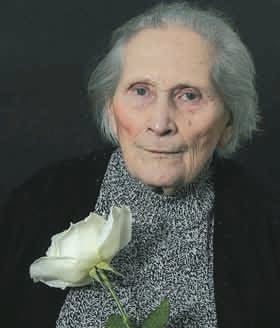
• Dorothy Ellis with the white rose of peace. Picture by Stuart Clarke


More About:
Comments
This article has no comments yet. Be the first to leave a comment.