
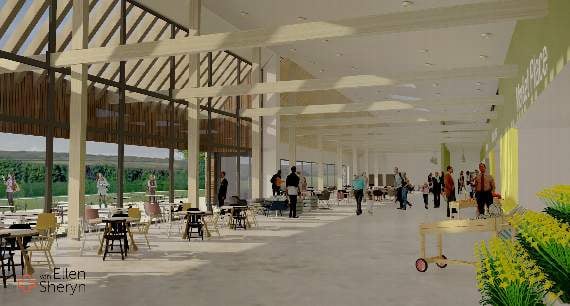
A CONTROVERSIAL planning application for the expansion of a service station in Okehampton was given the thumbs down by planning authorities last week.
Whitehouse Services, which owns the petrol station situated between Okehampton and Sticklepath, submitted plans which included a replacement highway services building, extended car park, heavy goods vehicle parking area and landscaping.
The plan has been the subject of controversy for several weeks as both residents and local parish council were torn by the proposed development.
Last Friday (March 3) Dartmoor National Park planners rejected the application on the grounds that it would have a detrimental impact on the character and visual appearance of the landscape and that it opposed the Dartmoor National Park Core Strategy — which is a blueprint for development over the next few years.




A spokesperson for Dartmoor National Park said: ‘The application has been refused because the proposed development would, by reason of its scale, design and location, have a detrimental impact on the character and visual appearance of this part of the National Park landscape.
‘The proposed development is outside any classified settlement and does not represent the small scale expansion and development of an existing business site — an appropriate sustainable tourism/small scale recreation enterprise based on the intrinsic qualities of the Dartmoor National Park or development needed to promote national park purposes. It is therefore contrary to the Dartmoor National Park Core Strategy Development Plan Document.
‘Although planning committee members decided to refuse the planning application, they did encourage the applicant to have further discussions with planning officers to determine what development can be achieved on the site.’
Joseph Marchant, a planning consultant for Whitehouse Services, said that the developers were disappointed with the decision as the proposed expansion would have significant benefits to the town, including increased employment opportunities as well as better facilities for a growing community.
He said members were ‘transfixed’ on the issue of scale and given that the eaves were just 4 metres and the ridge 8.8 metres — approximately the same as a terraced house —and the length no more than many agricultural barns, the refusal seemed ‘a great shame’.
‘We now have two options’, said Mr Marchant. ‘We can open up dialogue with the local planning authority but progress in respect of how likely this will achieve a resolution that meets needs would be implicated by whether the authority is realistic about any reductions in volume of the building.
‘The infrastructure that is needed to make the technical requirements of the services operate more efficiently and with improved environmental and safety credentials are costly.
‘The scale of the proposals were in our judgement not unreasonable, the height to the eaves is very similar to the committee rooms at DNPA’s, it was therefore surprising that the reaction was so adverse.
‘The length of the building is largely a necessary impact of fitting in the required facilities.
‘If a practically reasonable solution can’t be agreed, or it is felt that the scheme we had placed before the authority is, for practical reasons, the right scheme over and above anything else that can be agreed, then clearly the best option may be to appeal. However, I should stress no decision has been made at this time.’
Comments
This article has no comments yet. Be the first to leave a comment.