

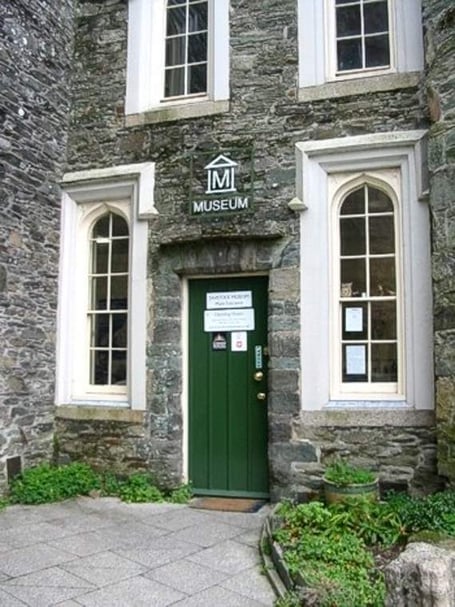
AFTER closing for the winter season, Tavistock Museum will be opening its doors and inviting visitors inside this weekend for two new exhibitions.
The museum will re-open on Saturday (March 25) and will be open daily from 11am to 3pm until October 31.
The main exhibition this season is ‘The Bicentenary of the Tavistock Canal’ which was formally opened on Tuesday, June 24, 1817 — 14 years after construction work had begun. On that day, around 300 invited guests embarked on nine wrought iron boats at the canal wharf in Tavistock and were waved off by cheering crowds.
Roderick Martin, museum secretary, said: ‘It was all very jolly as they glided through shady woodlands towards Crowndale Farm and then across the Lumburn Aquaduct, but when they reached the entrance to the canal under Morwell Down, even the stoutest hearts must have been apprehensive.’

.jpeg?width=209&height=140&crop=209:145,smart&quality=75)

Into the dark unknown of the canal tunnel, they went with only the light of the lanterns to guide them. This part of the journey was not for the faint-hearted for they were to spend the next two hours in the drabness and coldness of the jagged canal tunnel while the boats were slowly poled through. Spirits were kept alive by a band playing and various solo entertainments.
Once out of the tunnel and into the light, the relieved passengers were able to walk down into Morwellham Quay to claim some well-deserved refreshments. It was not recorded if there were any volunteers wanting to take the return canal trip back to Tavistock.
‘The exhibition concentrates on the exciting archaeological researches by Robert Waterhouse for a new publication on the canal and will also show some remarkable photographs of the inside of the canal tunnel taken by Times photographer James Bird,’ said Roderick.
‘The photographs are a revelation. Any ideas that the canal boats could be leisurely walked through the tunnel by boatmen lying on their backs are completely dispelled when you see the jagged profile of the rock faces. The boatmen poled the boats against the tunnel wall using long, iron-shod poles with a double spike on one end. This would have involved a huge physical effort.’
The other exhibition is ‘The WWII Liberator Crash on Plaster Down’ which has been arranged by Robert Jones. In October 1942 Consolidated Liberator was operating with RAF Coastal Command and had the call sign K ‘King’. Fitted with a radical new radar it had taken off from Hampshire to escort ships crossing the Bay of Biscay as part of Operation Torch, the allied invasion of North Africa.
As the Liberator was returning to RAF Beaulieu when it hit a barrage balloon cable as it passed over Plymouth. The aircraft was badly damaged and the crew tried to make an emergency landing at RAF Harrowbeer, Yelverton, but it was dark and with no lights to guide it, the Liberator crashed at Fullamoor Farm by Plaster Down. Six of the crew died and another was seriously injured.
This year the museum also has a new attraction of some reproduction stocks which visitors will be challenged to try. The Tavistock stocks were for three miscreants. They are believed to have once stood near the north archway at the parish church but later relocated to outside the police station. It was recalled they were used in the 1840s for a number of local delinquents convicted of drinking offences. In 1986 the stocks were removed from the cells at the police station to Tavistock Museum. Unfortunately they are now not in very good condition.
Roderick added: ‘Our thanks to our volunteers and contributors for the excellent new exhibitions again this year. The photographs inside the canal tunnel are amazing and we are most grateful to James Bird who has made them available to show in ort exhibition.’
Comments
This article has no comments yet. Be the first to leave a comment.