
MEMBERS of the Tavistock Royal Marines' Association (TRMA) turned out in force at the West Devon Club on October 28 to honour a late, Royal Marine who served on the notorious Arctic Convoys during the Second World War.
On behalf of her grandfather Sergeant Charles Edward Bloomfield, Sally Curtis, was presented the Arctic Star medal by Brigadier (retired) Simon Hill, president of the TRMA.
The Arctic Star is presented to the men who delivered vital supplies to the Soviet Union in the Second World War — often in horrendous weather and sea conditions and exposed to enemy fire. The decision to award the belated medal was only made by the Government in 2012 after a long-running campaign by the few survivors. War time Prime Minister Winston Churchill acknowledged the Arctic Convoy route as 'the worst journey in the world'.
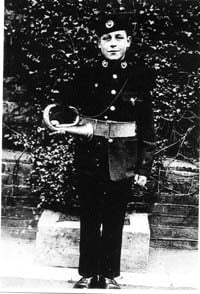
Charles Bloomfield, who was born in Worcester but lived most of his life in Portsmouth, joined the Royal Marine Light Infantry in 1917 at the age of 14 as a bugle boy and his career spanned the First and Second World Wars. In his time he served on many ships including HMS Warspite, HMS Courageous and the HMS Hood.
.jpeg?width=209&height=140&crop=209:145,smart&quality=75)

Charles was made sergeant in 1935 which was a proud moment in his career and went on to serve as sergeant RM gunnery instructor on HMS Manchester, a light cruiser, which was hit by an aerial torpedo while escorting a convoy to Malta on the July 23, 1941.
The ship was hit in the boiler room and 26 men were killed, she then sailed to Philadelphia in the USA for extensive repairs. HMS Manchester joined the home fleet at Scapa Flow in May 1942 for deployment to escort duties.
The convoys to the ports of Murmansk and Arkhangelsk (Arkangel) in Northern Russia in the White Sea within the Arctic Circle were the most hazardous and uncomfortable of the convoy routes.
Harsh and treacherous conditions were faced by both the British and American convoys which carried vital war materials, essential to the Russian war effort. Ice flows and gale force storms made life on board almost unbearable with day to day shipboard tasks becoming potentially life threatening. Ice which had built up on the upper parts of the ships had to be cleared and removed by the crew despite the risk of slipping into the icy waters with virtually no chance of survival.
As if this was not enough there was the constant attack from German occupied Norway in the form of surface warships, U-boats and the Luftwaffe (German Air Force).
In July 1942, HMS Manchester formed part of the defence of the infamous PQ 17 Arctic Convoy which suffered a loss of 24 out of 35 merchant ships. Following this incident she returned to the Mediterranean in August 1942 on Operation Pedestal to supply the besieged island of Malta.
However, on August 13, 1942, she was torpedoed by two Italian motor torpedo boats and eventually sank.
It was because of his Arctic Convoy service that Charles finally received his Arctic Star 72 years later!
Charles ended his continuous service in the Royal Marines as a steward in the sergeant's mess at Lympstone, South Devon in 1945.
John Webb, a member of the Tavistock Royal Marines Association, told the Times: 'Being part of the Atlantic Convoys was dangerous enough for those taking part but for those on the Arctic Convoys it must have been two or three times worse.
'Their basic life on board ship was horrendous with the cold and the ice. It must have been like living in a fridge! All they had was a low hand rail to hold onto in turbulent seas; one slip and you would be over the side, straight into the icy seas and dead.'
Mr Webb, who himself served as a Royal Marine for 22 years, said: 'Those on board must have been anxious whether they would get back or not as there was the danger of being torpedoed, aerial torpedoes or straffed by machine or cannon fire from the Luftwaffe. I cannot honestly imagine what it really was like for men like Charles.'
Mrs Curtis, a Tavistock librarian, said of her grandfather: 'Charles Bloomfield was a grandfather I never knew but I grew up hearing stories of his military career.
'Of all the stories that were told it was the Arctic Convoys that fascinated me and now to be a direct descendent of someone who took part in such a hazardous aspect of the war, performing these duties in such atrocious conditions makes me extremely proud.
'Charles fought in both the First and Second World Wars but it was an untimely motorcycle accident that killed him at the age of 49 that prevented me from knowing this extraordinary man — my grandfather.'
Comments
This article has no comments yet. Be the first to leave a comment.