
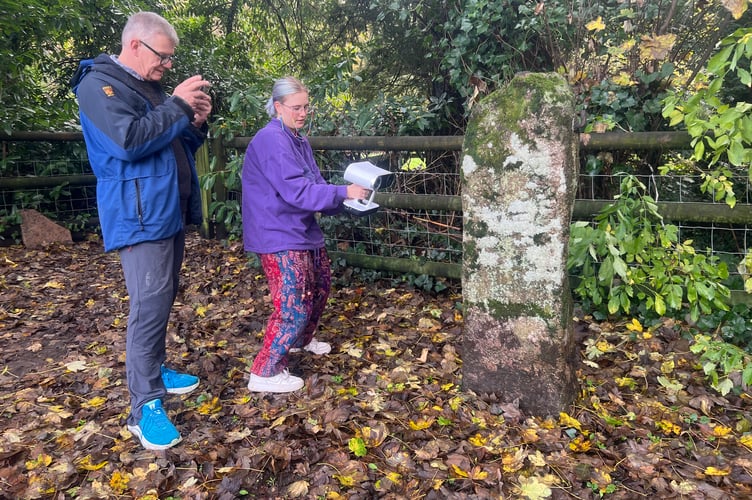
An appeal for citizen history detectives to investigate historic remains in their gardens has uncovered some monastic treasures.
The Tavistock Times publicised a request by amateur historians asking for help in a major project to bring alive the town’s former abbey by helping reveal the buried and destroyed remains to the public.
Some residents duly cut back undergrowth and looked more closely at stone objects they had previously taken for granted for years. The appeal led some to grow more curious about the possibility they were formerly part of the huge abbey which used to dominate the town.
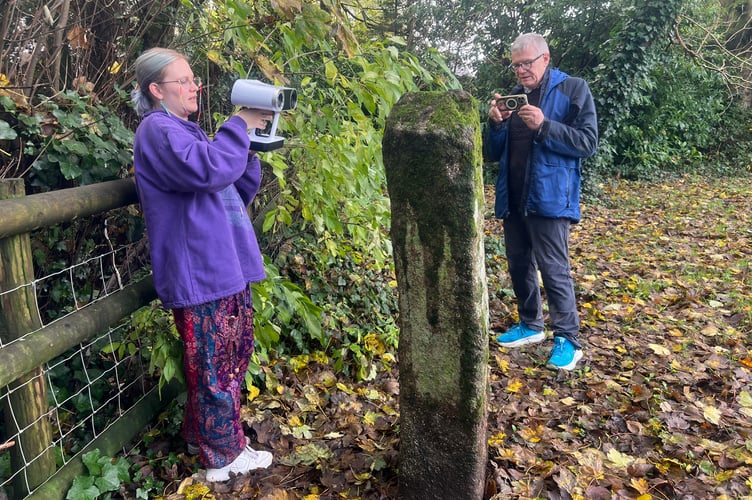
Local historians photographed one suspected abbey artefact, found in the parish vicarage garden, which included a very weathered five-foot high granite piece, resembling an inscribed gravestone.




Now Exeter University history researchers are looking into identifying the object to confirm it is from the abbey and from where on the building it originated.
Tavistock Heritage Trust (which is represents local history groups) is now hoping the finds will add to the overall picture of the abbey so it can be mapped and digitised for the public to view online.
There are glimpses of the abbey all over the town and the overall project is designed to pull them all together, enabling people to appreciate its former grandeur which reflects its regional dominance and national and international importance. There will also be an archaeological dig in the New Year for any resident wanting to dig into their town’s past.
David Conn, Chair of Tavistock Heritage Trust, contacted Dr Carly Ameen at the Dept of Archaeology at Exeter University about the Rediscovering Tavistock Abbey Project and the vicarage find. Tavistock. Dr Ameen then recruited one of her students Phoebe Holland to use her 3D scanning technology on the find, the results of which will be unveiled in the New Year.
The stones are believed to have been removed from their original location in the early nineteenth century. The scans allow people to view detailed 3D images of the stones with greater clarity of the inscriptions on the actual stones.
Phoebe is working voluntarily, supported by Exeter University. She has a degree in archaeology and history and studied prehistoric and early medieval sculpture in the South West, finding Christian inscriptions with crosses on a menhir.
For centuries, the remains of the once highly powerful and influential Benedictine Tavistock Abbey have only provided a few clues visible above ground.
Now historians and the town council want to reveal more of the remains to the public and involve them in uncovering their town’s greatest secret.
Historic England has awarded a £195,449 from its Heritage at Risk programme towards the project being run by Tavistock Heritage Trust and Tavistock Town Council.
David Conn, chair of Tavistock Heritage Trust, said: “This grant is a cornerstone in realising our long-term vision to rediscover and celebrate Tavistock Abbey. “
The award will fund essential repairs to the remains of Betsy Grimbal’s Tower, the great west gate of Tavistock Abbey.
Comments
This article has no comments yet. Be the first to leave a comment.