

South West Water has this week called for “better, longer-term” funding to help tackle problems caused by invasive non-native species as the water provider marks Invasive Non-Native Species Week (June 22-28).



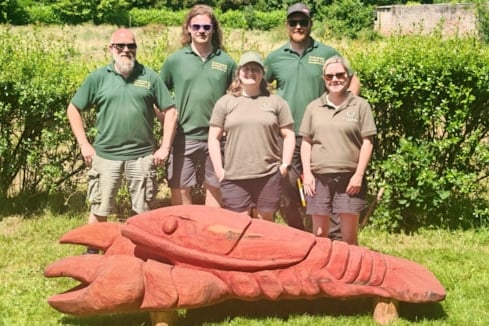
South West Water marked Invasive Non-Native Species Week (INNS) with a programme of activities, including the South West Invasive Species Forum’s tenth anniversary event in Bristol. Events took place both in person and online to raise awareness of the challenges faced. Art installations, including a 4ft carp at Argal reservoir, also garnered interest. A 6ft crayfish model is scheduled to appear on June 26.
Kate Hills, biosecurity and invasive non-native species manager at South West Water, said: “The last ten years of hosting the Invasive Species Forum have been a wonderful whirlwind. We have seen new invasive species arrive in Great Britain, but we have also seen partnerships and new forums work to prevent the spread of INNS and to protect our native species. Substantial efforts have been made to improve new technologies such as biocontrol, the use of detection dogs and eDNA. However, we still need better, longer-term funding and a strategic approach to be more effective.
“During this ten-year period, the yellow-legged Asian Hornet was discovered near Bristol. Although this hornet has proved an aggressive predator of honeybees and other pollinators, its appearance is a testimony to how we hope to react to invasive species going forward by raising public awareness and delivering a clear nationwide agenda.”
Non-native animals and plants introduced to Great Britain can threaten native wildlife by preying on them, competing for resources, or spreading disease. Species that cause harm are classified as invasive, are among the top five drivers of global biodiversity loss, and have contributed to 60 per cent of plant and animal extinctions.
Invasive species are difficult to control and cost the UK economy almost £2 billion annually. New non-native species are recorded in the UK each year. Most do not cause harm, but around ten to 15 per cent become invasive.
Comments
This article has no comments yet. Be the first to leave a comment.