

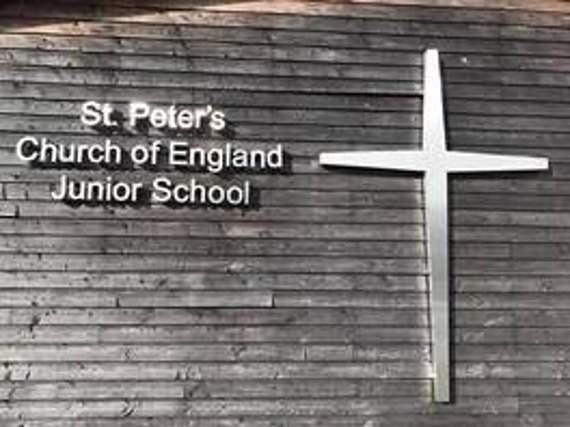
ST PETER’S Junior School has been told by education inspectors it needs to improve in key areas in a recent inspection report.
The primary school, part of St Christopher’s C of E Multi Academy Trust, was inspected last month and Ofsted deemed it to be ‘requiring improvement’.
While the school was rated as ‘good’ in the areas of effectiveness of leadership and management and personal development, behaviour and welfare, inspectors said it needed to improve its quality of teaching, learning and assessment and its outcome for pupils.
The inspector said that in the year following the academy conversion in July 2015, the trust ‘did not support the school quickly enough’. This led to a delay in securing sustained improvement in the school. However, more recently, the new chief executive officer had ensured that the school was fully supported and consequently, ‘standards were rising’.




In the report, the inspector highlighted that the progress of pupils, including the disadvantaged and those with special educational needs and/or disabilities continued to vary too much because of the ‘inconsistency in the quality of teaching’. They said too many pupils did not reach the standards they should.
Expectations of pupils were found to be inconsistent and pupils did not achieve as well as they should in mathematics. As a result, pupils’ progress had been in the lowest 20% of schools nationally for the last two years.
The inspector also said: ‘The teaching of writing is not consistently strong. There are weaknesses in pupils’ spelling and punctuation. This limits pupils’ ability to write with the technical accuracy expected for their age. Teachers’ use of assessment information is weak. Consequently, work is not consistently well matched to pupils’ needs. This prevents them from building effectively on prior knowledge, especially in writing and mathematics.’
However, the inspector also highlighted the school’s strengths, which included the headteacher leading the school with ‘skill and determination’, with his commitment to ensuring the best for every pupil being a key factor in the school’s ongoing improvement, and the governors’ and leaders’ decisive actions starting to have a ‘discernible’ impact on improving the standards in reading across the school. It was also highlighted that the school’s curriculum was well-balanced, the behaviour of pupils was good and safeguarding was ‘effective’.
In order for the school to improve further, the inspector said it needed to ‘improve outcomes for pupils by leaders and managers, ensuring that teachers are clear on how they can best support disadvantaged pupils and those who have special educational needs and or disabilities’ and ‘accelerate progress for all groups of pupils by the end of Key Stage 2 in all subjects by raising teachers’ expectations of what pupils of all abilities should be able to achieve, securing greater consistency in the quality of teaching, learning and assessment and making sure teachers make better use of assessment information to plan work that is neither too hard, nor too easy’.
Schools that require improvement are normally inspected again within 30 months of the latest inspection report. They may also receive monitoring visits.
Comments
This article has no comments yet. Be the first to leave a comment.