
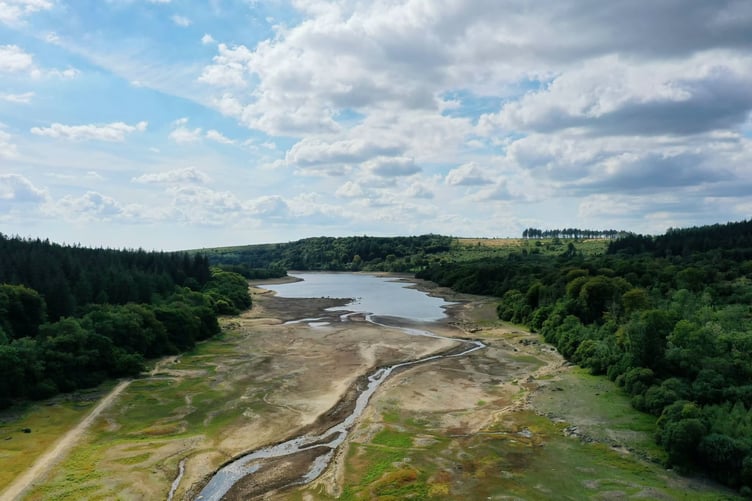
Much-needed heavy rain is forecast, but Dartmoor’s reservoirs are in need of a substantial top up.
Dartmoor is home to several reservoirs and dams supplying Tavistock, Okehampton, Plymouth and surrounding populations, but the total reservoir storage for the South West Water area has fallen to 29 per cent.
After the “hottest” summer on record, very little rainfall and higher demand on resources, reservoir levels are dropping. “Water resources are being used faster than they’re replaced”, according to South West Water (SWW).
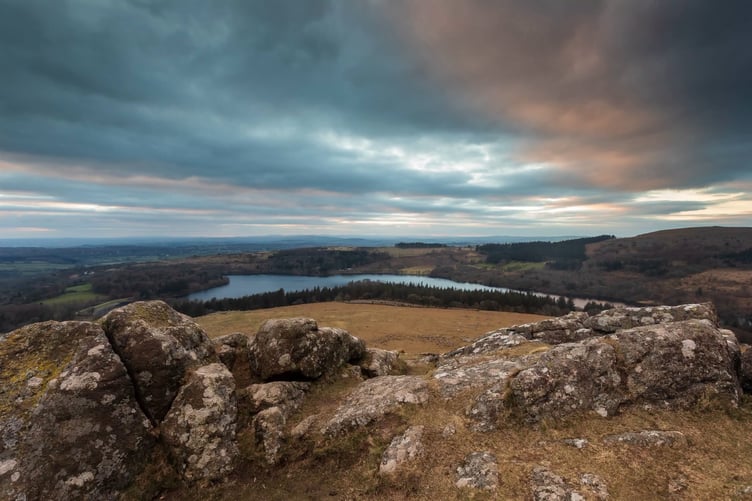
The Environment Agency recently confirmed that parts of Devon and Cornwall have entered Severe Drought status, and photographs taken by locals give a “stark reminder” of how little water remains in the reservoirs.
Sharing a photo of Burrator Reservoir “looking empty” on the Facebook Dartmoor Public Group, professional photographer Sam Hussey thinks we may “need some rain now more than ever”.
There is some rain expected in the coming days, but it will take a generous amount of rainfall to fully replenish water levels.
Tottiford Reservoir is on the eastern edge of Dartmoor and is currently just 17 per cent full. Venford Reservoir’s storage levels are at 20 per cent (as of October 20).
Fernworthy Reservoir is at 24 per cent and Burrator Reservoir 32 per cent. This time last year, Burrator was 53 per cent full.
Burrator Reservoir was first built in 1898 and it’s fed by River Meavy, Sheepstor Brook, Newleycombe Lake and other natural water sources.
Other water sources are Kennick, Tottiford and Trenchford Reservoirs, estimated to be at just 18 per cent full (October 2026) according to data from FloodRadar.




A newer reservoir, Avon Dam, built in 1957 in the South Brent area is fed by River Avon and Brockhill Stream – and this one is looking much more full at 41 per cent.
Meldon Reservoir is one of the newest, established in 1972. It’s fed by the West Okement River in the Okehampton area – and this water source is currently at 26 per cent.
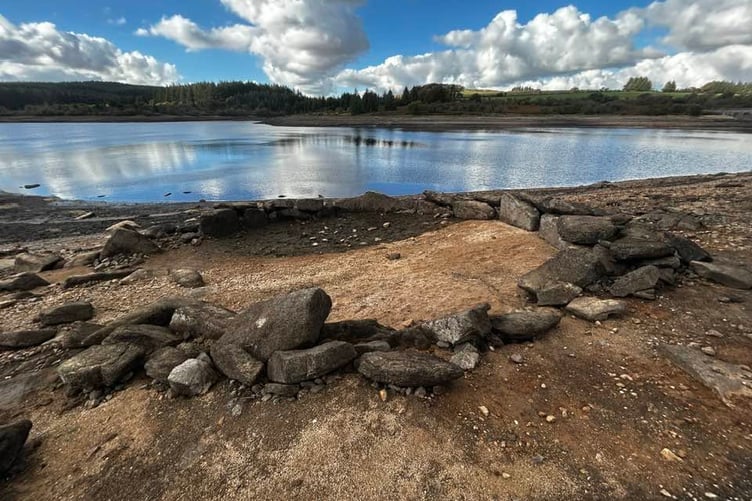
Fernworthy Bronze Age hut circle is ‘usually submerged’, and a local photographer, John Deakins, recently captured some striking images showing the low levels of this reservoir.
An ancient clapper bridge and a packhorse bridge is also currently exposed at Fernworthy, a sight not seen since the heatwave of 1976, locals say.

Locals have plenty to say about the current low levels, with many worrying about future supplies due to proposed data centres across the country, including the possibility of one on farmland between Great Torrington, Huntshaw and Weare Giffard in Devon.
Commenting online, one said: “Stop all data centres.”
These AI data centres would drive a “significant increase in water consumption” according to government reports.
One report ‘Water use in AI and Data Centres’ by lead author, Rich Kenny, co-chair of the GDSA Planetary Impact Working Group and published on Gov.uk, explained: “Global projections indicate that AI's water demand could reach billions of cubic metres annually, posing a substantial threat to water security worldwide and, critically, within the United Kingdom (UK).”
The water used by AI data centres is “primarily for cooling data centres and generating the electricity they require”.
Others in the online debate, on the Dartmoor Public Group, think the county “need more reservoirs” or for “water companies to fix leaks”.
Another said “rain will come, don’t panic”, but someone else argued “they're still throwing up houses by the thousands with no plan for the future“, adding that it’s only a matter of time before the “dung hits the fan”.
In a recent statement, Sam Bottomley, South West Water’s director for Drinking Water Services, said: “The South West is entering a critical phase of an exceptionally prolonged drought. While recent rainfall is helping, water resources remain under significant pressure and we continue to rely heavily on water stored in reservoirs to maintain supplies.
“Every day we continue to draw on our reservoirs to keep water flowing to homes, businesses and communities while river flows remain below the levels needed to support public water supply.
“Many people understandably think a drought is over once it starts raining. In reality, recovery takes much longer. After such a prolonged dry period, rainfall first has to replenish dry soils and the wider environment before rivers return to seasonal levels. Only then can reservoirs begin to recover properly.
“Some of those rivers still remain at their lowest levels. The immediate challenge is reducing demand and preserving enough stored water to maintain supplies until river flows and reservoir levels recover.”
Sam from SWW added: “Applying for a drought order is a responsible step to help protect the environment and preserve the water we have available. Taking action now gives us the best opportunity to protect supplies, reducing the risk of further restrictions and supply outages while water resources remain under pressure.”
“While household customers would not be impacted, we recognise these restrictions have an impact on businesses, and we will provide clear guidance and support if the application is approved.
“In the meantime, the hosepipe ban remains in place for all of our customers, and need customers to continue to take steps to reduce their water use as we do everything we can to protect water supplies.”
Ralph Ledbetter, water resources strategic lead at SWW, explained why the South West is now in Severe Drought status.
He said: “Recent rainfall is welcome, but we have not seen nearly as much as was previously forecast for October, and certainly not enough to remove the pressure on our water supplies.
“In some parts of the region, water stored in reservoirs has been supporting public water supplies since as early as March, and we have particularly low storage in a number of reservoirs.
“While these reservoirs are currently in the most critical position, storage across the region is dropping and needs all of our focus to protect customer supplies. Our rivers are still not flowing strongly enough to allow us to take the water we need to meet customer demand, so we remain reliant on stored water in our reservoirs. And that water is limited.”
Comments
We've recently changed our login process. If you have an account for commenting, you will need to re-register on the login window.
This article has no comments yet. Be the first to leave a comment.