
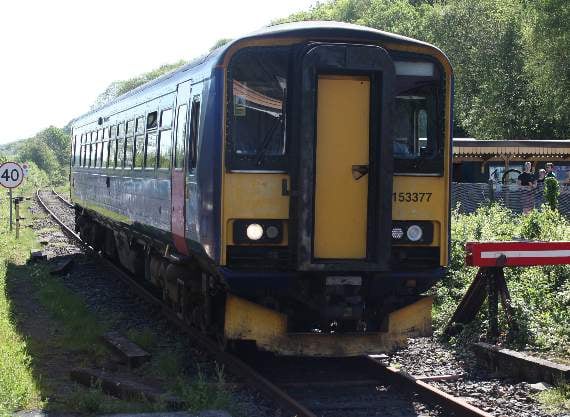
The costs of reinstating the Tavistock to Bere Alston rail link is now in the region of £70-million and adequate funding is not currently available, members of West Devon Borough Council heard this week.
In a recent study Devon County Council said the railway, which was linked with the 750-homes plan for Callington Road, was not viable at this time and suggested that alternative options to alleviate congestion on the A386 were indentified and assessed.
Members of the borough council’s overview and scrutiny committee agreed this week to lobby partner agencies in pursuing a solution to the congestion and still lobby for the reintatement of the railway.
A report to the committee stated: ‘DCC has been progressing the purchase of the disused rail corridor from the numerous land owners. The vast majority of the land is anticipated to soon (2019/20) be under the ownership of the county council. The rail reinstatement project has been progressed on the basis of the Callington Road planning permission. Reinstating the rail link is, consequently, considered by DCC as a longer-term aspiration.’



Funding for the reinstatement project was due in part to come from developers through a legal agreement (section 106) from the planned building of 750 homes off Callington Road in a phased manner up to £11-million over a number of years, along with contributions from the other two planned developments at Butcher Park Hill and New Launceston Road. However, DCC has stated that the project would cost around £70-million, so adequate funding was not currently available.
If the rail link is not delivered, the section 106 allows these payments to be put towards other public transport systems, highway improvements and/or an increase in the provision of affordable housing. The section 106 also requires up to £500,000 towards bus services and the provision of bus stops.
The report said: ‘The possibility of a cycle route along the rail line has been considered but with the route passing through woods it is potentially unattractive. DCC concludes that this could be effective as a first phase to the provision of a public transport link along the route. A phase 2 option would then be to build a single track capable of accommodating both a cycle and a vehicle link from Tavistock to the rail station at Bere Alston. This could accommodate a form of shuttle bus or electric vehicle running within the cycle route. Such a phased approach would not preclude a long-term solution of heavy rail.’
The report stated that in view of the findings of the DCC study and the uncertainty of the start of development on all the major sites — meaning the uncertainty of when funding through the section 106 agreements would come in — officers considered it necessary to work with greater urgency with partner organisations with a view to delivering measures to improve accessibility to services and employment by public transport and active transport. It said officers would convene a series of meetings with local ward members and interested parties and organise public engagement events to seek consensus on identifying and bringing forward the best options.
Cllr Ric Cheadle said: ‘The reason we brought this forward was because we felt like this was being done to us and we were not inside the ring. It will never be for West Devon Borough Council to fund the railway, it never was, but there was a feeling in the council last term like we weren’t even involved in the conversation, it was being done elsewhere.’
Cllr Robin Musgrave agreed saying there was a need for them to ‘pursue this more vigorously than we have been’.
Cllr Paul Ridgers said: ‘I support and endorse this. We see congestion on the A386 all the time. It’s not just the Tavistock end, it has become much busier around Derriford as it expands. We are in need of this rail link in terms of the sustainability and viability of Tavistock.’
The committee agreed to note that the council would continue to work with partner organisations to lobby funds to reinstate the railway; pursue with partner organisations, as a priority, an alternative major public transport scheme between Tavistock and Plymouth; continue to work with partner organisations and other stakeholders to deliver smaller scale interventions to improve safety and reduce congestion on the A386 and in Tavistock town and continue to engage with the community with respect to highway and transport matters.
The overview and scrutiny committee is due to receive another update at its meeting on September 3, which will include a presentation from Devon County Council.
Comments
This article has no comments yet. Be the first to leave a comment.