
Hundreds of thousands of people have walked past a crumbling historic Tavistock tower over the decades and wondered why it has been neglected.
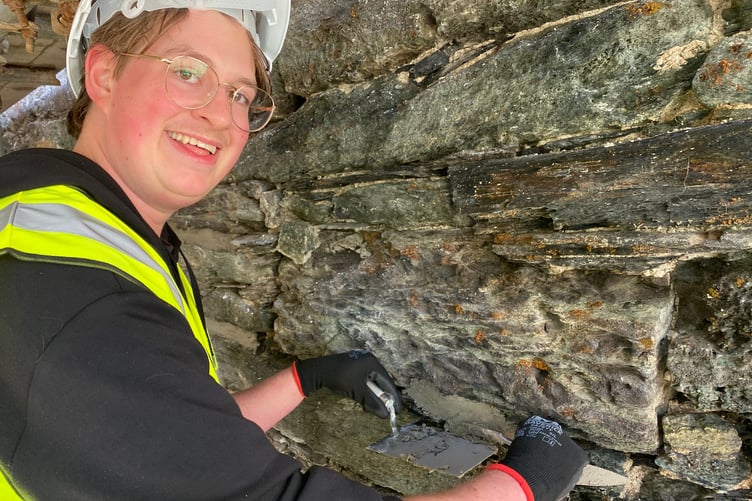
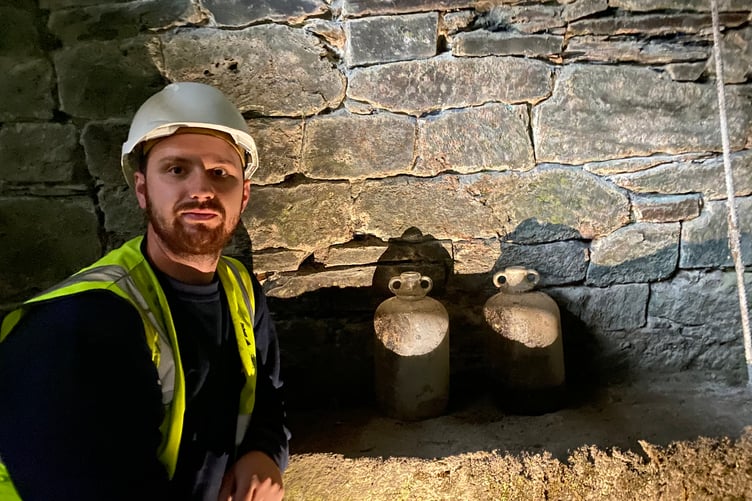
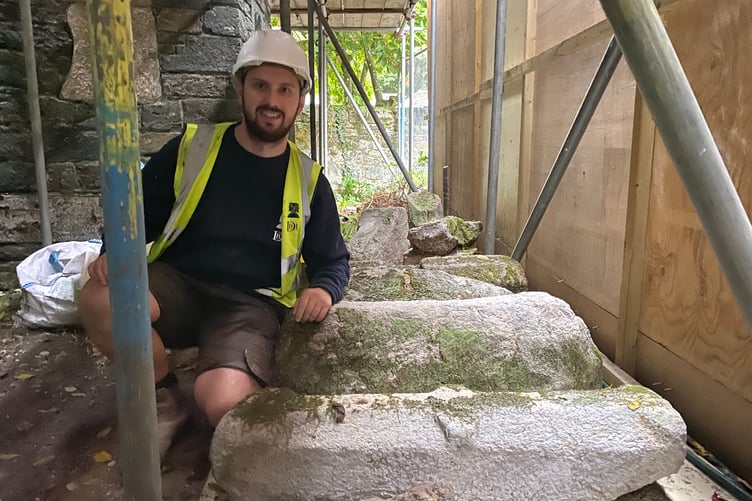
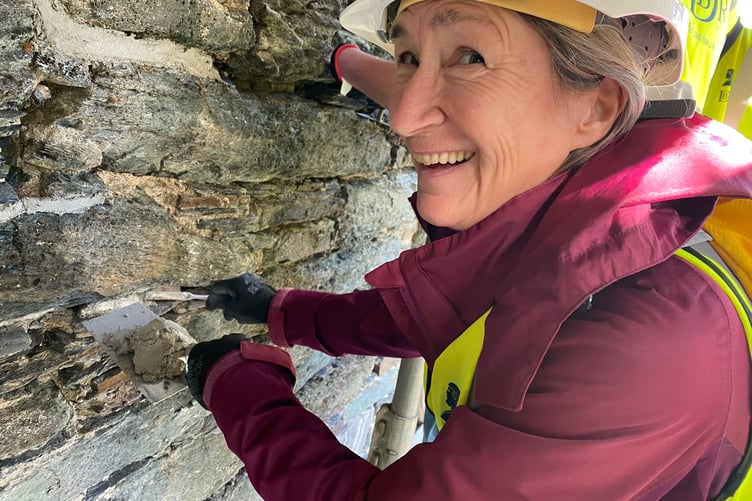
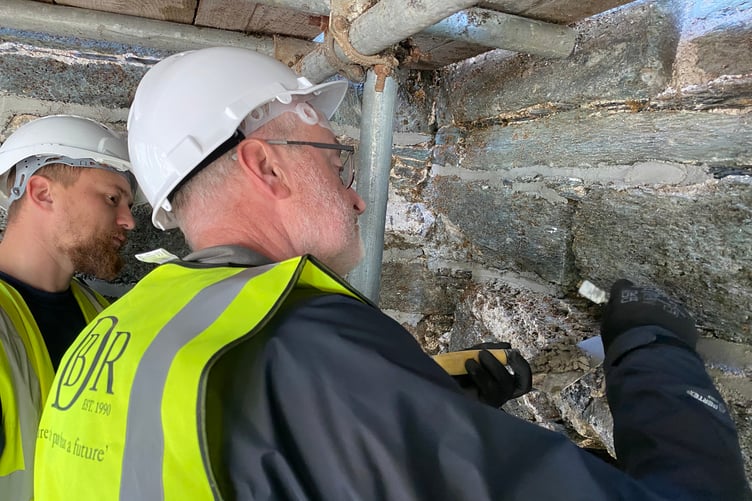
Many have now been optimistically paying more attention as workers and ‘citizen historians’ on scaffolding remove plant growth and repoint stonework on the landmark Betsy Grimbal’s Tower on Plymouth Road.
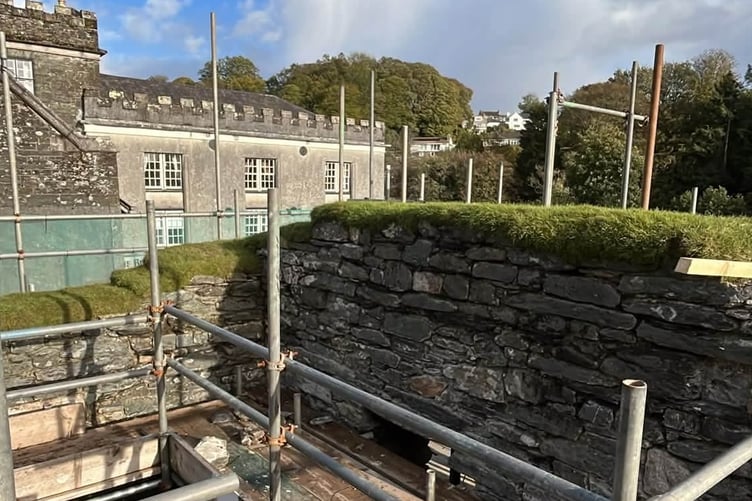
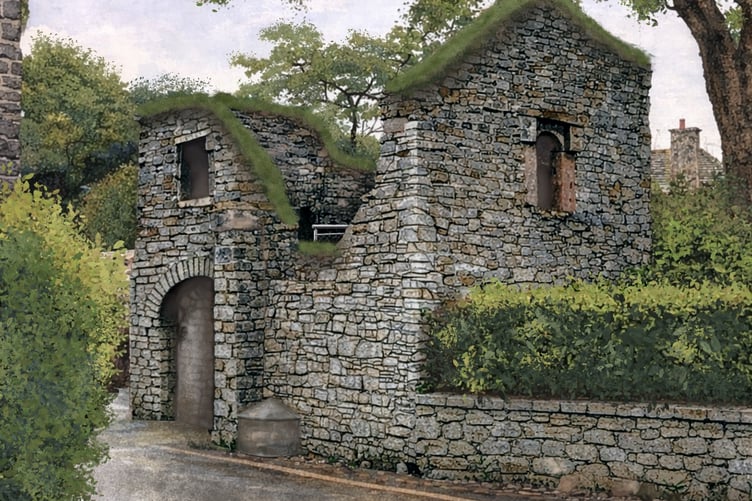
However, residents and visitors might be puzzled as to why the workers are now replanting grass on the top of the roofless former abbey gatehouse.
The reassuring (though maybe contradictory) explanation is that sometimes the best way to protect a medieval building is to let nature lend a hand, say the building restorers.
The exposed outline of the former roof supports have been covered in turf which is sealed underneath to protect the precious remains of the former giant abbey, now being methodically restored by DBR Ltd for the public to appreciate. Meanwhile, public have-a-go sessions have been run to learn stone repointing.
Architect Simon Crosbie of Le Page Architects is working for the major Rediscovering Tavistock Abbey Project, backed by Tavistock Town Council and English Heritage.
He said: “An important part of the conservation work is this interesting technique called ‘soft capping’ to protect its ancient stonework from weather and invasive roots as seeds land.
“This is nature’s protective blanket. Rather than covering the exposed tops of historic walls with cement, soft capping uses a carefully selected layer of soil and vegetation to create a living protective covering.
“The vegetation helps absorb and manage rainwater, reducing the amount penetrating the vulnerable masonry below.
“The living covering helps insulate the wall tops against extreme temperature changes and damaging freeze-thaw cycles.”

He said soft capping provides a ‘sympathetic’ conservation approach, preserving the ruins’ character without making them look artificially restored: “Conservation isn’t always about making something look new. Sometimes it’s about protecting what’s survived for centuries.”
Protecting exposed stonework and historic mortar significantly slows deterioration. The grass and new vegetation on top of the covering also encourages biodiversity, providing a habitat for wildlife.



Comments
We've recently changed our login process. If you have an account for commenting, you will need to re-register on the login window.
This article has no comments yet. Be the first to leave a comment.