
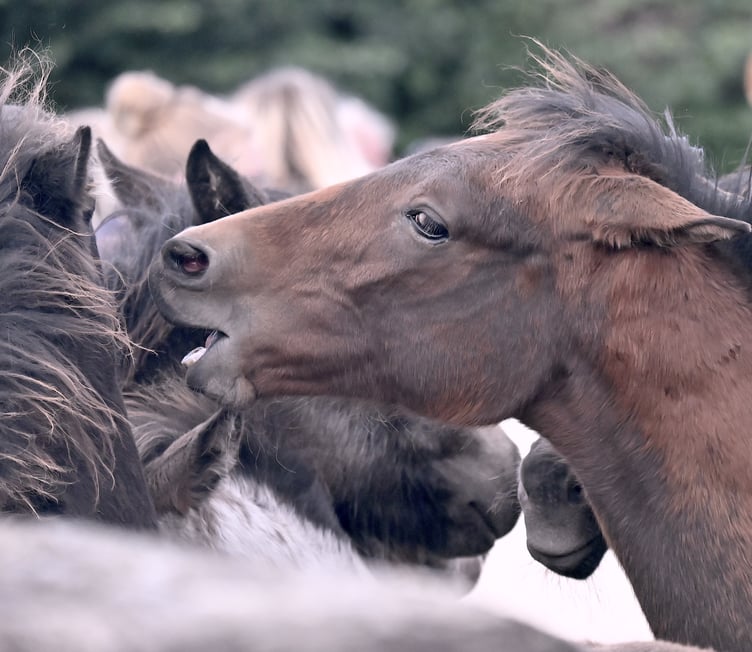
A 12,500-year-old horse tooth discovered in Kents Cavern in Torquay is helping scientists uncover an extraordinary connection between the ponies of Ice Age Britain and the Dartmoor Hill Ponies still roaming the Moor today.
The emerging discovery comes only months after the future of Dartmoor’s semi-wild ponies became a national political issue, winning support across party lines and attracting more than 200,000 signatures to a petition to save the ponies.
This groundswell of support prompted the Government to intervene directly and secure the future of the animals. Now genetic research suggests that the case for preserving this native population is even stronger.
Genetic information recovered from the Kents Cavern tooth is being compared with DNA from today’s semi-wild Dartmoor Hill Ponies.
Early analysis indicates that rare ancient genetic signals found in the Ice Age animal are also present in the Hill Ponies living on Dartmoor today.
Similar signals have been found in Ice Age pony remains from South-West France and among a small population of semi-wild upland ponies in Wales, but the Dartmoor Hill Pony is the only native English pony known to have these genetic variations.
Further genetic sequencing and analysis is required to understand the relationship fully.
These initial findings add to the weight of evidence supporting the importance of protecting
Evidence from the tooth indicates that the horse was butchered by people living in the area.
Previous research had already shown that the Dartmoor Hill Pony is genetically unusual.


The ponies were used as a reference for British horse ancestry in a major international study published in Science in 2023, after earlier genetic work identified a distinctive component within the Dartmoor Hill Pony population.
The public campaign to save the Dartmoor Hill Pony has therefore preserved not only an iconic part of Dartmoor’s landscape, traditions and ecology, but rare genetic characteristics inherited from some of Europe’s ancient pony populations.
Charlotte Faulkner, Chairman of Friends of the Dartmoor Hill Pony said: “For generations, Dartmoor’s hill farmers have kept these ponies because they belong on the Moor. We are now beginning to discover that, in doing so, they may also have preserved something much older.
“To think that a pony was living in what is now Torquay 12,500 years ago, that one of its teeth survived, and that modern science can now compare its genetics with ponies still living freely on Dartmoor is extraordinary.
“Only a few months ago we were fighting to make sure these ponies continued to have a future on Dartmoor. Now we are beginning to understand much more about the animals we fought to save.”
Alongside this exciting discovery, the Friends are working with Torquay Museum on a new exhibition exploring the remarkable history of Dartmoor's Hill Ponies, from the horses that lived alongside prehistoric people at the end of the Ice Age to the semi-wild herds that remain part of Dartmoor’s landscape today.
Clare Howe, Collections and Operations Manager at Torquay Museum added: “The collections from Kents Cavern provide extraordinary insight into the environment of Ice Age Devon. This exhibition will not only tell the story of the Dartmoor Hill Pony but will link them to their ice age ancestors, something that is only possible due to continued research on this designated collection.
Comments
We've recently changed our login process. If you have an account for commenting, you will need to re-register on the login window.
This article has no comments yet. Be the first to leave a comment.