
RECENT growth of vegetation on Dartmoor was described as being ?like whitewashing medieval wallpaintings? at a recent Dartmoor society meeting. More than 80 delegates packed into Meldon Village Hall last month to discuss the extraordinary rate of growth of vegetation: gorse, grass, bracken and trees on Dartmoor. Andy Guy from the rural development service, Defra, said there had been a 50% reduction in grazing animals on Dartmoor as a result of new ?environmental? measures introduced in the 1990s. Simon Bates from English Nature suggested climate change had been the main factor in altering Dartmoor?s vegetation, rather than the reduction in grazing. He said Dartmoor had a valuable role to play in acting as a ?sink?, absorbing carbon through its peat bogs and the increasing scrub. Contrary views were put forward by cultural environmentalist, Tom Greeves, who argued that society had not yet recognised the importance of Dartmoor as a cultural landscape of worldwide importance, on account of the almost complete survival of physical remains spanning 6,000 years. In the past eight years or less, much of this had become invisible, being obscured by gorse and grass ? the equivalent of ?whitewashing medieval paintings?. He claimed recent policies had been ?little short of calamitous?. The final speaker was hillfarmer Tracy May, who told graphically how difficult it now was for farmers to work with dogs in the overgrown landscape, and how dangerous the moor was becoming for those on horseback or quad bikes, as it was difficult to see pits and rocks. She also demonstrated how the economics of hill farming was unsustainable, with farmers having to pay out more to look after sheep and cattle than they could get when the animals were sold. In addition, the disease louping ill, newly arrived and spreading on Dartmoor, was having devastating effect on some flocks of sheep. In the general discussion sessions, many people expressed concern about the state of farming on Dartmoor. Others told how walkers were increasingly confined to paths and stressed the need for more burning of vegetation. Defra was urged to allow cattle to be kept out on the moor until Christmas. Much emphasis was put on the need for further research.
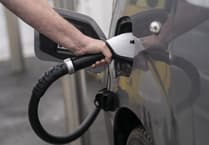 Tens of thousands of ultra low emission vehicles registered in Devon – as campaigners group call for more equal access across UKMore than 1,000 ultra low emission vehicles registered in West Devon – as campaigners group call for more equal access across UK
 Kate Bush tribute to 'dear friend' lost in Devon Christmas Day swim
 Wartime letters inspire Okehampton writer's novel