
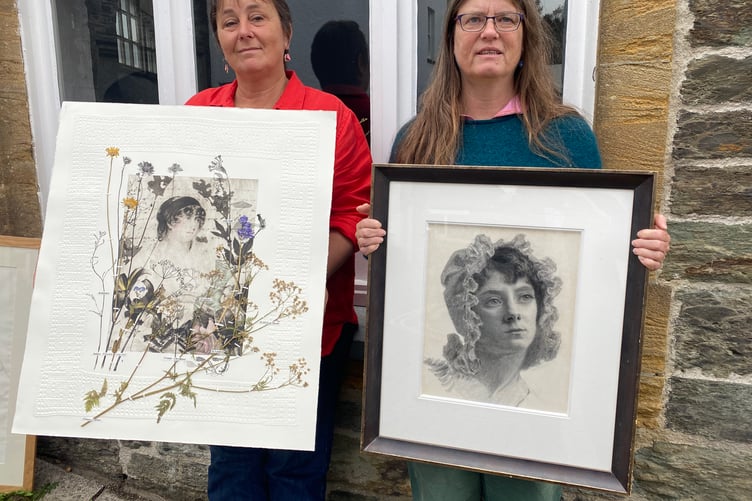
A magical collection of ‘lost and found’ drawings by two women is being displayed in Tavistock with interesting histories about their discoveries.
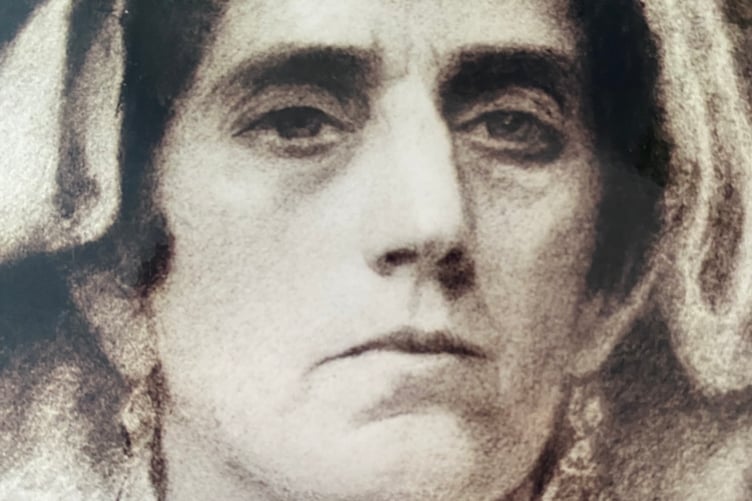
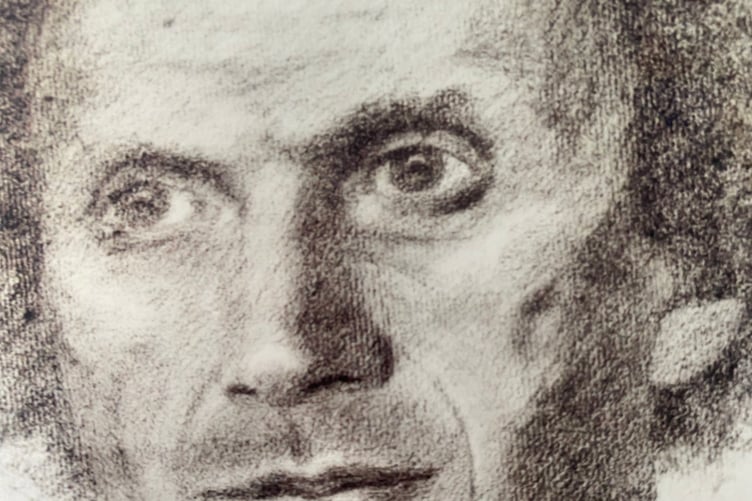
The free exhibitions of portraits, one by Eleanor Grace Scarborough (1905-1917) and the other a tribute to Juliana Vinicombe (1769-1856), will be at the Printworks, Thursday, October 22, to Sunday, October 25.
The tribute to Juliana incorporate herbs and other plants within and as part of the framing of portraits of five successive generations of her family. They are created by her relative and print artist Jo Waldron, Printworks manager.
It was only while researching for her masters in. art at Plymouth’s Box museum and gallery, Jo discovered to her amazement that Juliana was her great, great, great grandmother.
Jo chanced upon. a ‘profoundly significant’ discovery, on display were several botanical specimens from a herbarium (a collection of preserved plant specimens and data for scientific study) compiled 1793 to 1803 and attributed to Jo’s ancestor Sir John Aubyn. However, historical records suggested the herbarium was produced by his wife Juliana Vinicombe.
Convinced the that the extensive scientific collection was the primary work of Juliana, Jo arranged to see compare the specimens with those in the Natural History Museum, discovering Juliana’s 1,163 herbarium sheets comprised seaweeds, ferns, lichens and wildflowers.
Jo said: “They were mounted on paper with exceptionally detailed notes and are immaculately preserved. Despite being over 200 years old, every plant has been pressed so well they’ve kept their vivid colours.”
The plants serve as a record of SW flora, allowing scientists to track changes in plants and climate change. Additional notes on the use of plants in medicines makes it a valuable resource for studying 1700s health care in the SW.
Jo said: “This is my reinterpretation of Juliana’s herbarium, bringing to the fore her authorship, diligence and creativity, which has so far, been historically obscured.
“My aims has been to reclaim Juliana’s contribution and trace the intergenerational connection between women, common botanical knowledge and creative practise.


“Each piece is a visual bridge between family history and nature, documenting physical plants and the women who found meaning in them. Like family history, a pressed flower is a delicate remains of a once vibrant life. They are preserved through attention to detail, mirroring the maintenance of an ancestral archive.”
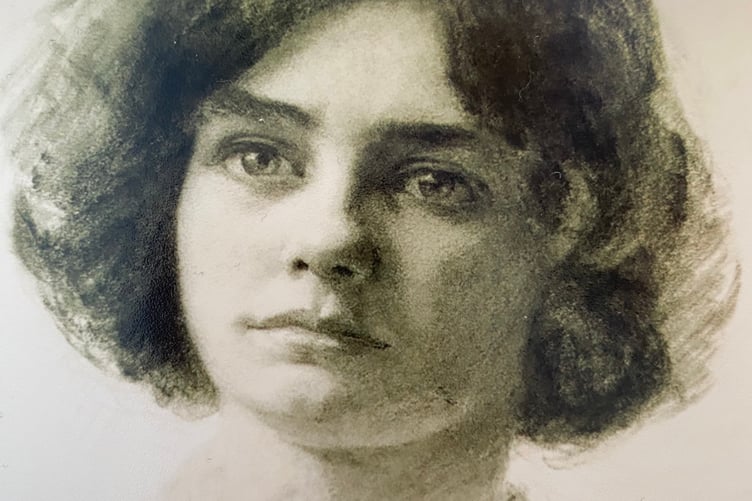
Meanwhile, discovered in an attic and not seen for a hundred years, Eleanor’s realistic drawings came to light ten years ago heaped in a corner of an Exeter auction house. In danger of being thumbed through to destruction and separated for ever, these beautiful drawings have survived to be treasured again.
Tracing their history has revealed that Eleanor Grace Scarborough was born in 1881 in Crouch End London and was among the first women to exhibit at the Royal Academy in 1905 and 1917, and with the Society of Women Artists 1913-1914.
A small glimpse into the life of this artist can be seen amongst her drawings and other effects found in her portfolio. These early 20th century life drawings have been lovingly restored and framed.
Comments
We've recently changed our login process. If you have an account for commenting, you will need to re-register on the login window.
This article has no comments yet. Be the first to leave a comment.