
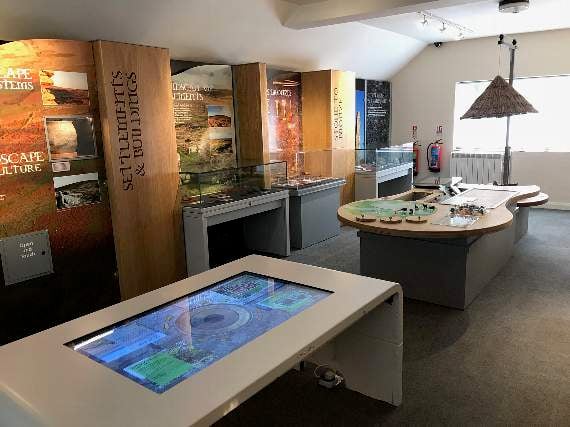
A NEW state-of-the-art exhibition has brought ‘Dartmoor’s past to life’ and provides a glimpse into the ancient moorland.
The free ‘Life, Death and Landscape’ exhibition at the Postbridge Visitor Centre features touch-screen games that allow people to uncover moorland secrets hidden for thousands of years.
Among the treasures waiting to be revealed are the unique goods found in a Bronze Age grave in 2011 on Whitehorse Hill made by Dartmoor National Park Authority archaeologists.
Replica prehistoric clothing allows visitors to dress the part while beyond the centre’s doors a new History Hunter’s trail highlights some of the moor’s prehistoric sites, are just a short stroll away.

.jpeg?width=209&height=140&crop=209:145,smart&quality=75)

The exhibition also boasts artefacts from Exeter’s Royal Albert Memorial Museum’s prehistoric collection, presented alongside replica bronze tools and weapons, graphic interpretations, models and audio-visual presentations.
‘Our new exhibition is really bringing Dartmoor’s past to life,’ said visitor services manager Rebecca Martin.
‘The human experience of 4,000 years ago was quite different to that of today yet the clues of what life — and death — were like are all around us when we know how to look.
‘We’ll help you explore the stunning archaeology from Whitehorse Hill where the cremated remains of a young adult were buried almost 4,000 years ago. The contents had been wrapped in a bear skin and the grave goods included more than 200 beads, probably from a necklace.
‘Wooden studs similar to the ear stretchers worn by some people today were also discovered as was textile and leather, a flint tool, basketry and bracelet of woven cow hair.’
The Bronze Age was the time when metals first began to be made and used in Britain and spans the period between 2,300 to 700BC. Working with bronze was only one of the many changes that happened during this long period.
Okehampton company Far Post Design (museum designers) created and designed the exhibition with the national park authority.
Owners Mike and Sarah Cashman said: ‘We created a multi-layered exhibition that’s big on imagination and excites all the senses and gets people to think and immerse themselves into this key story on the excavation on Whitehorse Hill.
‘We have been working hard with the Dartmoor National Park to create these three-dimensional stories — one element is where you build your own landscape and it makes people think of when the landscape and environment changed.’
• THE remains of the Bronze Age burial — on moorland between Lydford and Chagford — captured attention as what was discovered was an extraordinary and internationally important collection of Bronze Age grave goods, providing a rare glimpse into the personal and prized possessions of someone who lived on Dartmoor nearly 4,000 years ago.
The burial, a scheduled monument at risk, was set within an eroding island of peat and was first discovered more than ten years previously. Attempts to prevent its further deterioration failed because of its exposed location and the rescue excavation in 2011 was crucial to help record the important fabric and content of the monument.
Comments
This article has no comments yet. Be the first to leave a comment.