

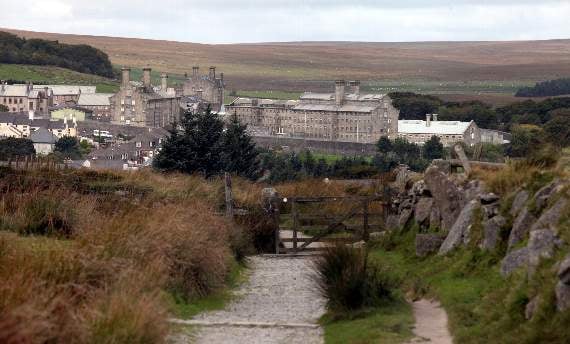
AN independent annual report looking at the workings of Dartmoor Prison has said that staff shortages are proving a major challenge at the facility.
The Independent Monitoring Board (IMB) at the category C prison has published its annual report for 2016-17.
The report has concluded that strong and reasonable leadership has supported the prison through a very trying period, during which staff shortage has been a major challenge to both officers and prisoners. Members of the IMB have been alarmed at the restriction placed on recruitment and the resulting necessary changes to prisoners routines, leading to long periods of prisoners being locked in their cells and loss of opportunities to exercise, shower and telephone their families.
The report also describes how the requirements of the increasingly elderly population of the prison puts further strain on staff, as outpatient appointments and bed watches in hospital have further increased, taking officers away from already stretched resources on the wings.

.jpeg?width=209&height=140&crop=209:145,smart&quality=75)

The IMB has been concerned about the increasing levels of self harm and the higher number of documents opened to support prisoners with low mood (assessment care in custody teamwork documents). There have also been regular arrivals from other prisons of prisoners with these documents.
The report raises the lengthy delays in achieving repairs and also the disappointing lack of capital investment in the prison this year. Changes to the Napoleonic building are required to fully embrace social care of the elderly.
The report also draws attention to the continuing struggle to keep drugs out of the jail, the ongoing problems of loss of property during transfer to HMP Dartmoor, and the arrival of prisoners with incomplete assessment papers (called offender Assessment System or OASYs).
The latter puts further pressure on the offender management unit. Attention is drawn to the lack of sexual offence treatment programmes at HMP Dartmoor and also to difficulties experienced by the lack of funding provided for resettlement services.
Many of these particular issues were also raised in a report published by HM Inspectorate of Prison published in December 2017.
Despite these ongoing problems, the IMB has praised the cleanliness inside the wings and the hard work the working parties have put into the attractive garden areas. The report points out that Dartmoor Prison has a lower level of violent incidents than other comparable jails and care is taken to protect the vulnerable from exploitation.
The report commends the commitment shown to handling sensitively the care of transgender prisoners and welcomes the development of important groundbreaking work supported by the Centre for Peaceful Solutions in restorative justice and mediation.
Overall, despite considerable hurdles this year, the report concludes that prisoners at HMP Dartmoor are treated fairly, with dignity and respected as individuals.
The full report can be read at www.imb.org.uk/reports from January 9.
Comments
This article has no comments yet. Be the first to leave a comment.