

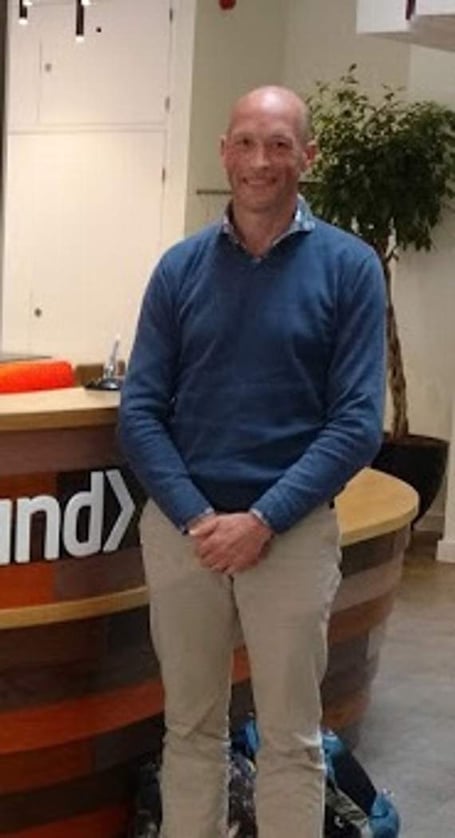
A HEALTHCARE trust has said it will do its best in the future to ensure staff feel supported at difficult times in their lives following an inquest which revealed that a hospital consultant from North Tawton took his own life after suffering work-related stress and mental deterioration following a cycling accident.
Dr Alastair Watt was found dead in a field near his home in December 2017. The 45-year-old diabetes consultant had taken an overdose of antidepressants and insulin.
A four-day inquest at Exeter County Court last week heard that Dr Watts was struggling with his workload.
It also heard that a cycling accident in 2016 had left Dr Watts with a brain injury which had a significant impact on his life.




His wife slammed the hospital he worked for, saying it had put its operational needs above those of its clinicians and patients.
She said Dr Watts was ‘stressed and overworked ‘and had a ‘toxic relationship’ with his medical director.
Senior coroner for Devon, Philip Spinney, recorded a conclusion that Dr Watts took his own life.
In a statement released after the inquest, chief executive of the Northern Devon Healthcare NHS Trust (NDHT) Suzanne Tracey said: ‘Staff at NDHT were devastated at the loss of Alastair.
‘He was an incredibly well respected and well liked physician and a friend to so many. As always, our thoughts are with Alastair’s family and friends.
‘As a responsible employer, we have tried to take all the learning we can from this very sad case and we have asked ourselves what we can do to ensure our staff feel supported, particularly at difficult times in their lives.
‘We will now be looking closely at the outcome of the inquest to see if there is any further learning we can take.’
The coroner, who did not make any recommendations to prevent the risk of further deaths, said that ‘the circumstances that Dr Watts took his own life were complex and multi dimensional’.
Mr Spinney said Dr Watt had ‘expressed suicidal thoughts and plans and left a note apologising to his family and friends’ before he took himself off to remote private land where he died.
‘It is most likely he intended to take his own life that day,’ said the coroner.
Three marks on his neck appear to have been where he injected unprescribed insulin using a needle, he said.
The father of 12-year-old twins left a note at his home before his body was found.
The note was tucked into the back a pad which revealed concerns for some of his patients and was found on his bedroom floor.
The coroner read the contents in which Dr Watt wrote: ‘I apologise to my family, friends and wider healthcare community of North Devon. They have no responsibility to bear.’
He then referred to close members of his family saying ‘each has special qualities and should be allowed to prosper’.
Detective constable Laura Tasker told the inquest that there were no suspicious circumstances and no third party involvement in Dr Watt’s death.
She said police did not know where he obtained the insulin from that he used to kill himself but it had not been prescribed.
She added that his mobile phone was examined but there were no messages suggesting he was suicidal.
Some messages to friends referred to medical problems he was suffering from a head injury he sustained in a bike crash in 2016, as well as his return to work plan.
The inquest heard that Dr Watt had suffered a head injury during a cycling accident in Wales in 2016 which left him with a brain injury.
His stress levels increased after the biking crash and he was later signed off sick with work related stress before he died.
His widow Ruth, a GP, told the inquest that her husband told her: ‘I cannot do this. There is too much work. I just cannot do it. I am really struggling.’
She described her husband’s relations with the former medical director at the Northern Devon Healthcare Trust as ‘toxic’.
Ruth Watt said he was ‘highly agitated’ and he told his wife: ‘I am single handed and no one is overseeing me.’
Pathologist Dr Russell Delaney said Dr Watt’s collapse and death was ‘most likely due to the effects of the drugs which led to hypothermia’.
Dr Stuart Kyle, a consultant rheumatologist and deputy medical director at the Northern Devon Healthcare Trust, said his friend’s relationship with the then medical director was ‘not a good relationship’.
Dr Kyle said: ‘His (Watt) biggest concerns was not letting patients down, they were incredibly important to him.’
And he said he did not want to let down his colleagues because he ‘wasn’t pulling his weight’.
Dr Watt made a bizarre claim that he may have harmed some of his patients but Dr Kyle stressed: ‘There was absolutely no foundation to them.’
The consultant was born in Zambia and he excelled at sport — playing rugby for Saracens, Barts and the University of London.
He was also a quick runner and after too many rugby injuries, he took up cycling and was known as the ‘Beast’ by his fellow riders due to his hill climbing abilities.
After the inquest, his wife Ruth said: ‘It is a tragedy that North Devon Hospital puts its operational needs above the needs of its clinicians and patients. And my children and I live with that tragedy every day.
‘I continue to struggle to understand how my husband and partner of 21 years, who had no previous history of mental health problems, could develop such severe work related anxiety and subsequent depression that he could see no future.
‘Alastair told me in the two months before his death that he believed he had no future at North Devon Hospital.
‘He had been unable to affect any change to his working conditions.
‘He was over worked and became very stressed to the point that ... my eloquent husband became incoherent.
‘He explained in clear terms his over work and lack of resources and the decrease in his ability to cope with this work pressure. I strongly believe that they refused to listen to him.
‘I believe there were many failures by North Devon Hospital which had a terrible effect on Alastair over the weeks and months before his death and that senior oversight of trust processes was missing.
‘Doctors who are sick, whether with head injuries, stress, burn out, mental health problems or any other illness must be actively and properly supported by the NHS.
They must be allowed time to recover and return successfully to their previous jobs,’ added Mrs Watt.
Comments
This article has no comments yet. Be the first to leave a comment.