
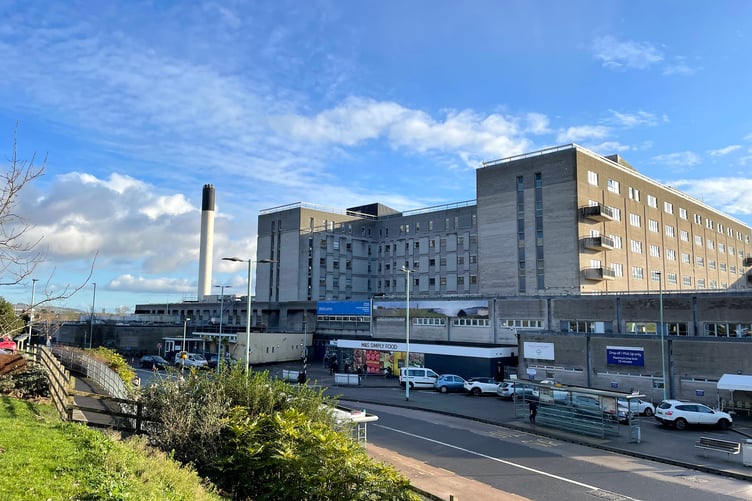
ALMOST two in three patients arriving at Derriford Hospital’s emergency department waited longer than four hours in September, as new figures expose the scale of the NHS crisis across Devon and Cornwall.
The worrying figures show just 36.2 per cent of patients attending Plymouth’s major A&E department were admitted, transferred or discharged within four hours – the worst performance of any hospital trust in England.
It marks the eighth consecutive month University Hospitals Plymouth NHS Trust has finished bottom of the national rankings, and the ninth time in the past year it has recorded the country’s worst performance.
Of the 9,089 patients attending Derriford’s main emergency department last month, 5,796 waited more than four hours.
Performance has deteriorated significantly over the past year, falling from 41.1 per cent in September 2025 to just 36.2 per cent last month.
The latest figures come days after reports of patients crowding into corridors and waiting areas at Derriford, highlighting mounting pressure on emergency services serving communities across Devon and Cornwall.
The trust acknowledged exceptionally high demand, with chief operating officer Adel Jones admitting services were under significant pressure, particularly because of the number of patients requiring hospital admission.
She said staff had recently worked through the night to keep patients safe, prioritising the most seriously ill, and that conditions in the department had subsequently improved.
However, the warning signs extend well beyond Plymouth, with hospitals across the wider region struggling to meet national emergency care standards.
No major hospital trust across Devon, Cornwall and Somerset reached the national four-hour performance figure of 60.6 per cent, with several recording some of the worst results in England.




Royal Cornwall Hospitals NHS Trust, which runs Treliske in Truro, managed just 47.2 per cent in September, down sharply from 57.3 per cent a year earlier.
The trust recorded the 12th-worst performance nationally, having ranked second-worst in both May and June.
Royal Devon University Healthcare NHS Foundation Trust, responsible for the Royal Devon and Exeter Hospital and North Devon District Hospital in Barnstaple, was the 20th-worst performer in England.
Just 50.2 per cent of its patients were dealt with within four hours, compared with 54.6 per cent in September 2025.
Somerset NHS Foundation Trust recorded 52.4 per cent, while Royal United Hospitals Bath NHS Foundation Trust achieved 56.7 per cent. Torbay and South Devon NHS Foundation Trust performed better, but still fell short of the national figure, with 59.6 per cent.
The figures measure the time from arrival until patients are admitted, transferred or discharged at major, consultant-led A&E departments, rather than simply how long they wait to see a doctor.
The scale of the pressure facing Derriford could intensify as winter approaches, with the trust warning it may need an additional 122 adult hospital beds at peak demand.
A temporary 22-bed ward has been proposed at an estimated cost of £600,000 over four months, in a bid to provide extra capacity during the busiest period.
University Hospitals Plymouth has urged people with non-life-threatening conditions to use NHS 111, GPs, pharmacies and urgent treatment centres where appropriate, helping ensure emergency departments can prioritise those most seriously ill.
However, a major investment is currently under way at Derriford in an effort to improve emergency care in the longer term.
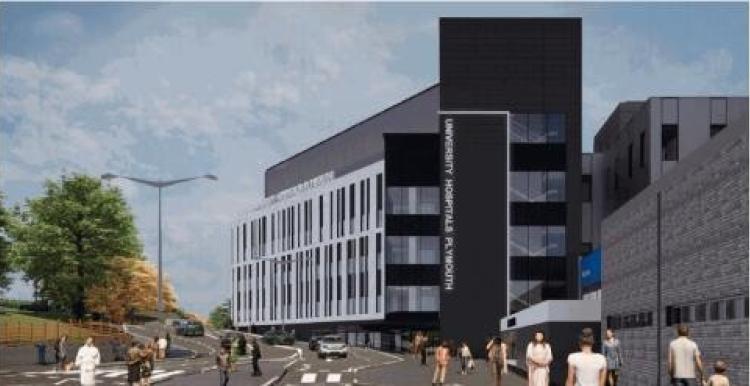
Work officially began in October 2025 on a £247-million Emergency Care Building, marking a significant milestone in the Government’s New Hospital Programme.
The four-storey development is due to open in 2028/29 and is intended to transform urgent and emergency services for patients across Plymouth, Devon and Cornwall.
Plans include an expanded emergency department, a dedicated children’s emergency department and a Same Day Emergency Care unit for patients requiring urgent hospital treatment without an overnight stay.
The building will also house four interventional radiology theatres, supporting advanced diagnosis and treatment, alongside five surgical theatres for emergency and planned procedures.
The investment aims to increase clinical capacity, modernise facilities and provide patients with a more dignified experience while improving working conditions for staff.
University Hospitals Plymouth NHS Trust has been approached for further comment on the latest figures but, at the time of going to press, had not responded.
Comments
We've recently changed our login process. If you have an account for commenting, you will need to re-register on the login window.
This article has no comments yet. Be the first to leave a comment.