
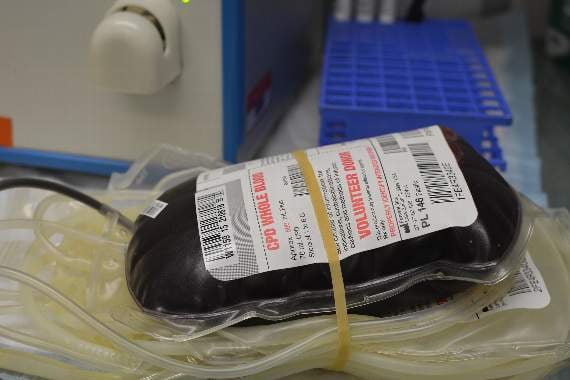
NHS Blood and Transplant has confirmed that it will continue its blood donor sessions at Okehampton after completing a review on the donation service across Devon and Cornwall, writes Tom French.
The NHS has revised its programme of donation sessions in the two counties in an effort to collect more blood at its larger venues. Following the review, numerous sessions run in rural communities in halls, community centres and churches will be axed. The Tavistock Methodist Church and Callington Town Hall sessions will be among those to go.
The NHS has said that the need for blood is not as high as it once was, which has played a role in the decision. Hospital blood use is declining by 3-4% a year.
Mike Stredder, director of blood donation at NHS Blood and Transplant said: ‘We are very grateful to all those who give up their time to donate blood. Their generosity helps save and improve the lives of patients across the country.



‘The demand for blood is reducing, partly because of improvements in clinical practice, such as keyhole surgery. This means we sometimes need to reduce the amount of blood donation sessions that we hold. It is important we don’t waste precious donations by collecting too much blood.
‘When we need to reduce the amount of blood donation sessions we hold, we try and make sure we retain the sessions that allow us to collect the most blood in the most efficient way. These are usually larger sessions at venues which can accommodate nine donation chairs.
‘While hospitals are using less blood than in previous years, we still need to collect 1.5-million units of blood a year. We look forward to seeing our loyal donors at their next donation.’
Every blood donation can save or improve up to three lives and each day NHS Blood and Transplant needs around 6,000 donors to give blood at sessions across England to meet patient need.
While donors from all blood groups are important, the NHS particularly needs donors from O negative (the universal blood group), A negative and B negative to donate regularly as stocks of these blood groups are more vulnerable to shortfalls.
More black and south Asian people are needed to become blood donors to reflect the ethnic diversity of patients.
To find out more about blood donation, visit www.blood.co.uk
Comments
This article has no comments yet. Be the first to leave a comment.