
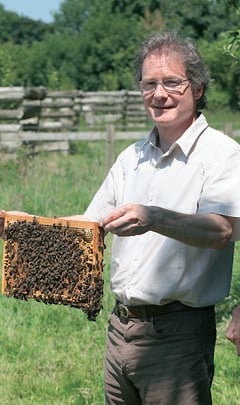
A PIONEERING project aimed at protecting Cornish Black Bees has this week been given a boost, in the form of a grant from the Heritage Lottery Fund. The B4 Project, 'Strengthening the Heritage of the Cornish Black Bee' has been given £9,600 to increase knowledge and understanding of the benefits of the Cornish strain of the honey bee, and to encourage beekeepers to keep this particular strain, strengthening local stocks of the sub-species. B4 (Bringing Back Black Bees), a Cornish-based conservation organisation, hopes to promote the qualities of the native black honey bee across the South West and further afield. Tavistock dentist Dr Andrew Brown, who has masterminded the B4 group, has been keeping bees for just three years — but is a passionate advocate of the Cornish Black. He said: 'These bees have probably been around in Cornwall since the last ice age — they have certainly been here for at least the last 1,000 years — and during that period they have adapted to the wet, windy and mild climate. 'Black honey bees are the original bees of the British Isles, but their gene pool has been diluted over the past century by breeding with non-native sub-species. It's a terrifying thing — we have only had the technology in the last few years to really understand their importance, and we are in danger of losing something before we've even appreciated what we had. 'They are worth saving because they are uniquely adapted to living in the fluctuating climatic conditions of the UK.' Dr Brown has even created his own small laboratory at his home near Cotehele, where he is actually able to artificially inseminate his Cornish Black Bee queens, in an effort to keep the stock as pure as possible. The B4 Project is being supported by geneticists at the Food and Environment Research Agency (FERA) regarding the genetic heritage of Cornish Black Bees. This work, funded by the project, will highlight the extent to which the Cornish bee population has been hybridised with non-native honey bee sub species, which will provide guidance for future conservation efforts. The B4 project will be working with local beekeepers to collect data about their bees. This data will add to the picture of how the local sub species became less popular for new beekeepers than imported species and provide insights to help promote the re-introduction of the local sub species. Exhibits and displays will be created at locations such as Paignton Zoo, The Eden Project, Lost Gardens of Heligan and Paradise Park to reach people who are currently not engaged in beekeeping. Each site will feature an observation hive, allowing close, safe access to the bees, viewing points and information material to explain the importance of the Cornish Black Bee and its local significance. 'Invertebrate trails' will encourage young people and families to find out more about the Cornish Black Bee through educational activities and games, and a 'bee experience' will allow members of the public to assist experienced beekeepers in opening up the hives, examining the bees and handling the frames. Nerys Watts, head of the Heritage Lottery Fund in the South West, said: 'The Sharing Heritage programme is a wonderful opportunity for communities to delve into their local heritage and we are delighted to be able to offer this grant so that the B4 Project can help people embark on a real journey of discovery about natural heritage. 'Heritage means such different things to different people, and HLF's funding offers a wealth of opportunities for groups to explore and celebrate what's important to them in their area.'



Comments
This article has no comments yet. Be the first to leave a comment.