
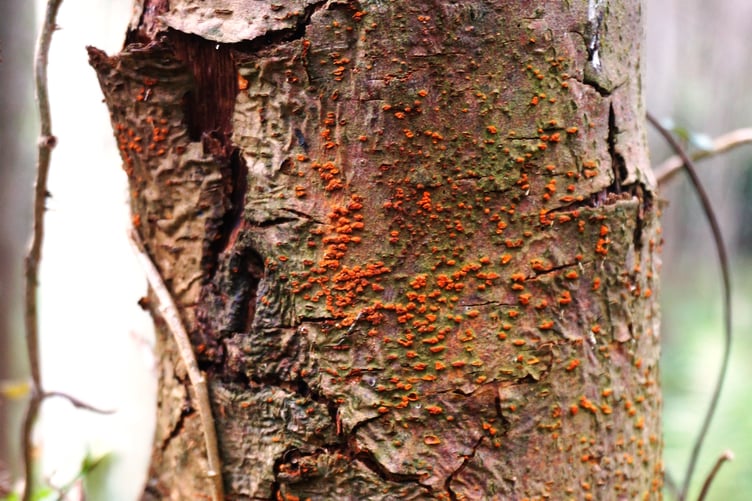
The Forestry Commission implemented trade restrictions on sweet chestnuts in West Devon yesterday (August 26) to prevent the spread of chestnut blight in the region.
The government agency made the decision to extend the trade restriction introduced across Mid Devon, East Devon, South Hams, Exeter, Plymouth and Torbay this April into West Devon and east Cornwall, following the discovery of blight-infected trees close to the western edge of the boundary. In order to ensure each site has the required buffer zone, the Forestry Commission has expanded the trade restriction area.
Defra chief plant health officer Professor Nicola Spence, said: “The risk of sweet chestnut blight spreading has increased significantly in parts of the South West. Extending the demarcated area is a necessary step to help protect sweet chestnut trees.
“I would urge anyone who owns or works with sweet chestnut trees to remain vigilant and report signs of disease through TreeAlert.”
Forestry Commission head of plant health forestry Andrea Deol added: “Restricting the movement of susceptible material is one of the most effective tools we have to slow the spread of this disease.
“We would encourage the public to check their sweet chestnut trees and support the Check a Sweet Chestnut campaign. The compliance and cooperation we have already seen from forestry and trades has played a significant role in supporting our efforts so far.”
Trading restrictions on sweet chestnut trees and other susceptible material will apply across the expanded area, to help prevent the further spread of this fungal disease through the movement of infected plants and material, and to help disease management efforts.




Sweet chestnut blight, caused by the fungus Cryphonectria parasitica, affects sweet chestnut trees and can cause significant dieback and tree death. The disease is spread via airborne spores which increases the risk of the disease spreading to new areas.
Comments
We've recently changed our login process. If you have an account for commenting, you will need to re-register on the login window.
This article has no comments yet. Be the first to leave a comment.