
ONE of Dartmoor's most vigorous defenders died early in the new year.
Lady Sylvia Sayer, who spent more than 50 years trying to protect her beloved Dartmoor from the ravages of developers and the military, died on January 4 at the age of 95.
She became Lady Sayer in 1959 when her husband was knighted. She resurrected the Dartmoor Preservation Association after the second world war to counter the expansion of military training and china clay mining, the building of reservoirs, erection of television masts, afforestation, ploughing and the enclosure of open country.
She was chairman of the DPA when Dartmoor became a National Park in 1951 and a member of the park committee. She resigned in 1957 in protest at its failure to uphold National Park values.
.jpeg?width=209&height=140&crop=209:145,smart&quality=75)
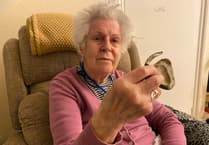

'Through the DPA, Sylvia fought them all tirelessly with devoted support from her husband Guy. She didn't care what people thought so long as she did the right thing for Dartmoor,' said Kate Ashbrook, president of the DPA.
Kate, a friend for more than 27 years, said granite was in Lady Sayer's blood.
She was born in Plymouth on March 6 1904. Her mother's family farmed on Bodmin and grandfather Robert Burnard founded the DPA in 1883. He lived on the moor at Huccaby House where she would often visit.
'It was a place of strong and potent magic. To be told we were going to Huccaby was to be seized with a kind of mad joy; to leave it was a cruel banishment,' Lady Sayer once said.
The Sayers bought Cator, a tumble down long-house near Widecombe, in 1928. They lived there all their lives.
In assessing her life Kate said: 'Considering she was often up against enormous odds, she was very successful. The areas of Dartmoor that are still wild — those are her monuments.'
One of her biggest successes was getting two competing china clay companies to share a waste tip elsewhere, saving Shaugh Moor, and also preventing the building of a reservoir at Swincombe Valley right through the 1970s.
'She was accused of being responsible for the drought in 1976, but there would still have been a drought even if they had built it — it just wasn't a suitable site,' said Kate.
She was outspoken, and, being a woman, found herself with many enemies, but Lady Sayer also had a multitude of friends and a huge family. Kate described her as exceptionally warm, kind and humorous.
Her legacy must be one of having raised the awareness of many people to the importance of Dartmoor as an increasingly rare wild open space.
The threat continues unabated today and people must learn from her uncompromising and determined stance if the fight against those who would exploit Dartmoor for their own ends is to continue.
There will be a thanksgiving service at Widecombe church at 2pm on February 10.