
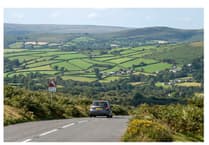
DISCOVER?Dartmoor's wealth of walks, spectacular moorland views, archaeology and animals, which can provide hours of fun for all the family.
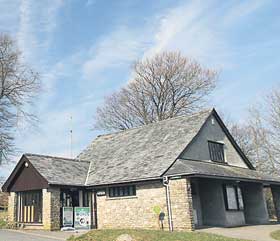
And one of the most interesting places to start is at Dartmoor National Park Information Centre at Postbridge.
Walk through the centre's doors and explore what is on offer, from the information on nearby walks, including Bellever Forest, to the in-depth exhibition in the centre upstairs that tells the story of Dartmoor's Bronze Age period.
The exhibition contains a host of artifacts, including replicas of Dartmoor's prehistoric heritage like the Bronze Age Hameldon dagger.

.jpeg?width=209&height=140&crop=209:145,smart&quality=75)

Dartmoor National Park is considered one of the most important areas in Western Europe for prehistoric archaeology — and due to a storm in 2007 which caused damage to the woodland at Bellever, archaeologists were able to excavate a Bronze Age round house.
The Bronze Age was when metals first began to be made and used in Britain and spans the period between 2,300BC and 700BC.
The team excavated the feature at Bellever and found eleven post holes, two post holes at the entrance of the house, evidence of a hearth and next to it is what is believed to be a cooking hole.
Inside the round house was a stone cairn and inside the cairn was a whet stone which would have been used for sharpening tools.
They found 150 pieces making 16 whole pots which date to around 3,500 years old. These pots would have been used for drinking out of, eating out of and cooking with.
At the beginning of exploring the exhibition you are greeted with a replica Bronze Age pot, perfectly created by Joss Hibbs of Powdermills Pottery.
In February 2010 she was asked to make a replica Trevisker Ware pot for the Postbridge exhibition. As an experienced potter Joss rose to the challenge and after some experimentation she completed the mammouth task.
A video, on loop in the room, explains how she made the clay pot using locally sourced, natural ingredients, and built and fired as it would have been done in the Bronze Age.
The excavation of the 3,500-year-old Bronze Age hut circle also revealed a remarkable sequence of well preserved deposits features, as well as pottery.
Investigations also revealed that when the building was occupied the surrounding landscape was fairly open and considered of improved grassland.
Visitors can go around the exhibition room and discover the rich history of Dartmoor, plus there is something to occupy the youngsters!
Not only is there interactive play as a History Hunter where youngsters can pick up a quiz sheet and answer questions on the exhibition to win a badge — children can also dress up in traditional Bronze Age clothing, build a 3D Bronze Age hut circle, discover what is hidden within a sand pit and take part in a colouring competition.
Mike Nendick, communications officer for the Dartmoor National Park Authority, said: 'The exhibition has been there for several years but has been updated with Dartmoor artifacts from the Royal Albert Museum, Exeter.
'A 3D?hut circle built just for us by Greenspace, based between Tavistock and Okehampton, is great fun for kids and adults.
'It's worth going along to the exhibition and bring the kids at the weekend — and it's great for schools as a resource to learn about Bronze Age Dartmoor.'
The exhibition has been a joint effort from the DNPA?and the Royal Albert Museum, Exeter.
The Postbridge centre is open Thursdays to Sundays from 10.30am to 3.30pm.
• If that was not enough to convince you to visit, Dartmoor National Park Visitor Centres have been awarded gold in the 2014/15 Devon Tourism Awards.
The centres at Princetown, Postbridge and Haytor scooped the gold award in the Tourism Service of the Year Category.
The awards celebrate Devon's tourism establishments with each experiencing mystery visits, having websites assessed and being scored by an independent judging panel.
Richard Drysdale, visitor services manager for DNPA, said: 'Dartmoor National Park visitor centre staff deal with a wide range of Dartmoor enquiries annually from over 150,000 visitors who come from all over the world. This award is therefore wonderful recognition of their professionalism, the service they provide and the knowledge that they impat to our visitors.'
Comments
This article has no comments yet. Be the first to leave a comment.